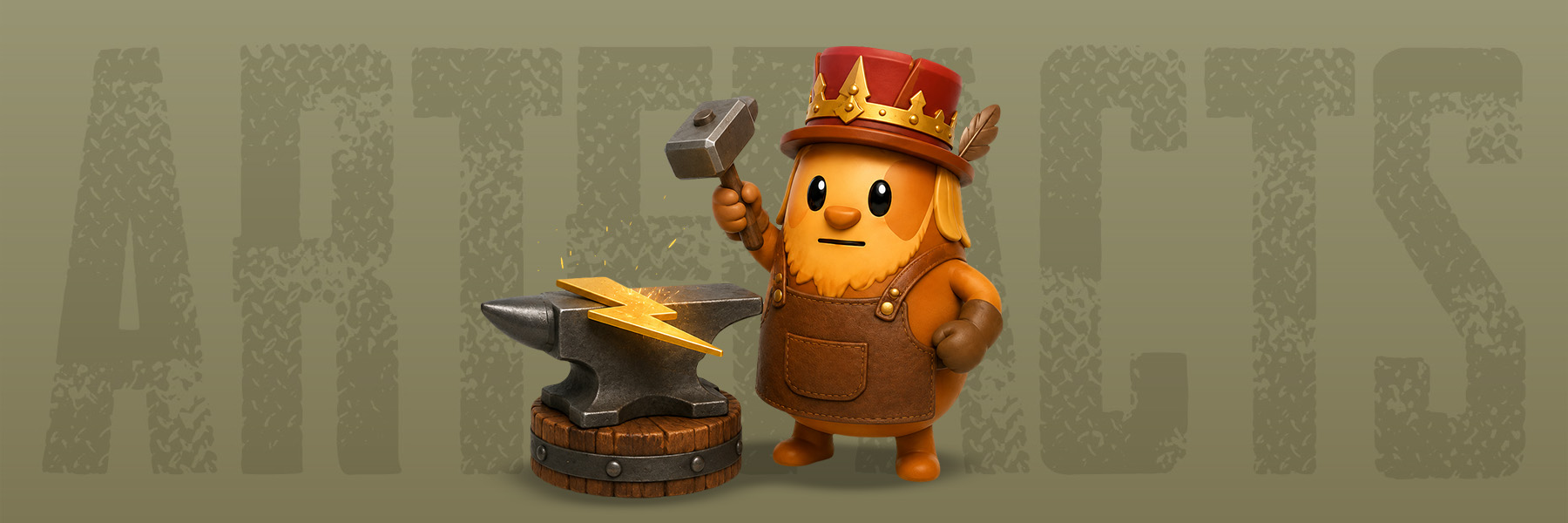
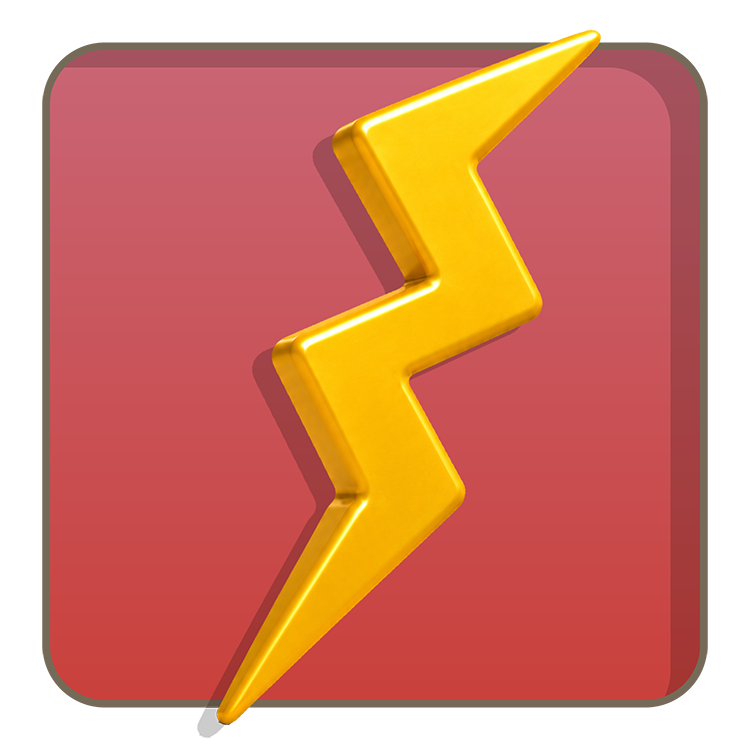
Zeus's thunderbolt is the most powerful weapon in Greek mythology. It is not an ordinary flash of lightning picked up from a cloud. The Cyclopes, three one-eyed divine smiths named Brontes, Steropes and Arges, forge it for Zeus during the war between the Olympian gods and the Titans. Uranus and Cronus had imprisoned the Cyclopes deep below the world. Zeus frees them, and their gift helps him defeat the older rulers. From then on, the thunderbolt becomes the clearest sign that Zeus is king of the gods and master of the sky.
Fun fact: The Cyclopes forged Zeus’s thunderbolt during the war against the Titans.
Learn more about Zeus' Thunderbolt
Poseidon's trident is a three-pronged spear that represents his rule over the sea. It resembles a fishing spear, an object that people living around the Mediterranean would have recognised. In myth, however, it can do far more than catch fish. Poseidon strikes the ground with it to split rocks, create springs and shake the earth. He can stir calm water into a storm or quiet the waves again. The trident therefore joins his two great powers: he is lord of the sea and the Earth-Shaker who causes earthquakes.
Fun fact: Poseidon’s trident could create springs, split rocks and shake the earth.
Learn more about Poseidon's Trident
Hades's helm is usually called the Cap or Helmet of Invisibility. The Greek name can be translated as the cap of Hades, but also as something that makes a person unseen. It belongs to Hades, ruler of the underworld, and allows its wearer to disappear from the sight of gods and mortals. Unlike a helmet made only to stop a sword, this one protects by preventing an enemy from knowing where the wearer is at all.
Fun fact: Hades’s magical helm could hide its wearer from gods and mortals.
Learn more about Hades' Helm
The talaria are the special sandals associated with Hermes, the swift messenger of the gods. Their name comes from Latin, while Greek writers speak of winged or beautiful sandals in different ways. Modern pictures nearly always attach small wings to Hermes's ankles, but ancient art is less consistent. Sometimes the wings appear on the sandals, sometimes on his traveller's hat, and sometimes Hermes simply moves with divine speed. The important idea is not one exact shoe design. It is his ability to cross enormous distances and move between worlds.
Fun fact: Hermes’s winged footwear became a lasting symbol of supernatural speed.
Learn more about Hermes' Talaria
Athena's aegis is a protective object carried by one of Greece's most powerful goddesses. Ancient descriptions do not give it one perfectly fixed shape. It can be a goatskin cloak, a fringed shield-like covering or a breastplate worn over the chest. Snakes twist around its edge, and the terrifying face of the Gorgon Medusa often appears in the centre. When Athena raises or shakes the aegis, enemies panic. It protects its bearer while turning fear itself into a weapon.
Fun fact: Athena’s aegis often displayed Medusa’s terrifying face as protection.
Learn more about Athena's Aegis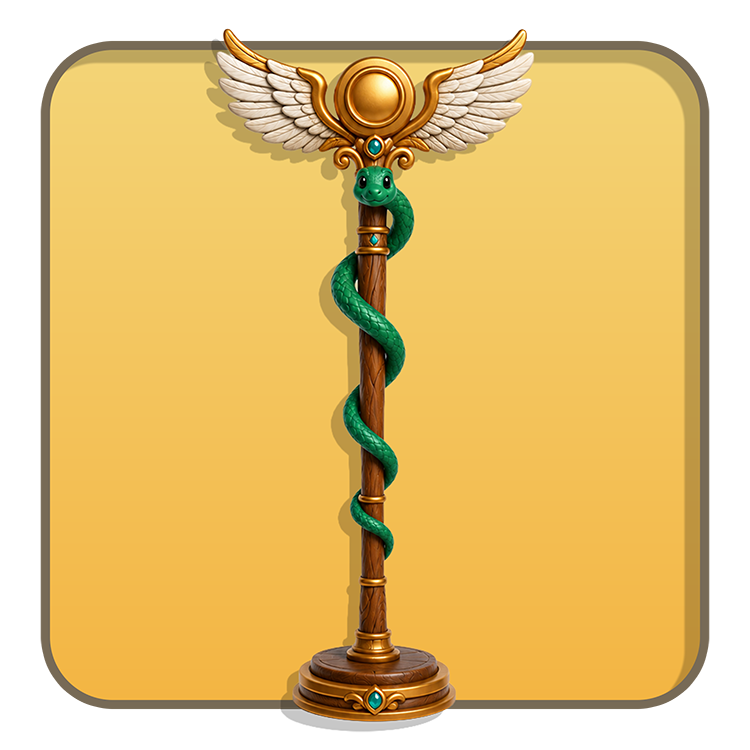
The Staff of Asclepius is a plain wooden rod with one snake curling around it. It belongs to Asclepius, the Greek god of medicine and healing. The design is simple, but it has become one of the world's most important medical symbols. Hospitals, ambulances and health organisations still use it. The single snake and single staff matter, because this emblem is often confused with Hermes's caduceus, which normally has two snakes and wings and originally represents a herald rather than a doctor.
Fun fact: The true ancient medical symbol has one snake and no wings.
Learn more about the Staff of Asclepius

Hi! I’m Jocelyn, and I created Mythfits Society to make discovering ancient myths easier, more interesting and much more fun.
Read My Story