


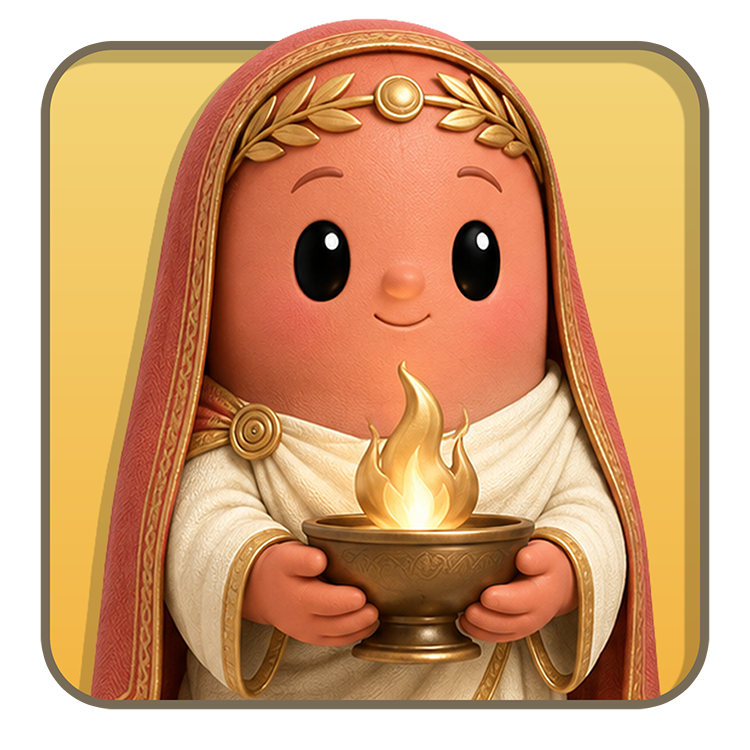
Vesta was the Roman goddess of the hearth, the fire at the centre of a home used for cooking, warmth and light. Romans connected her with the Greek goddess Hestia, but Vesta developed an especially important public role in Rome. Just as every household had a hearth, the Roman state had its own sacred fire. It burned inside the circular Temple of Vesta in the Roman Forum and represented the continuing safety and life of the city.
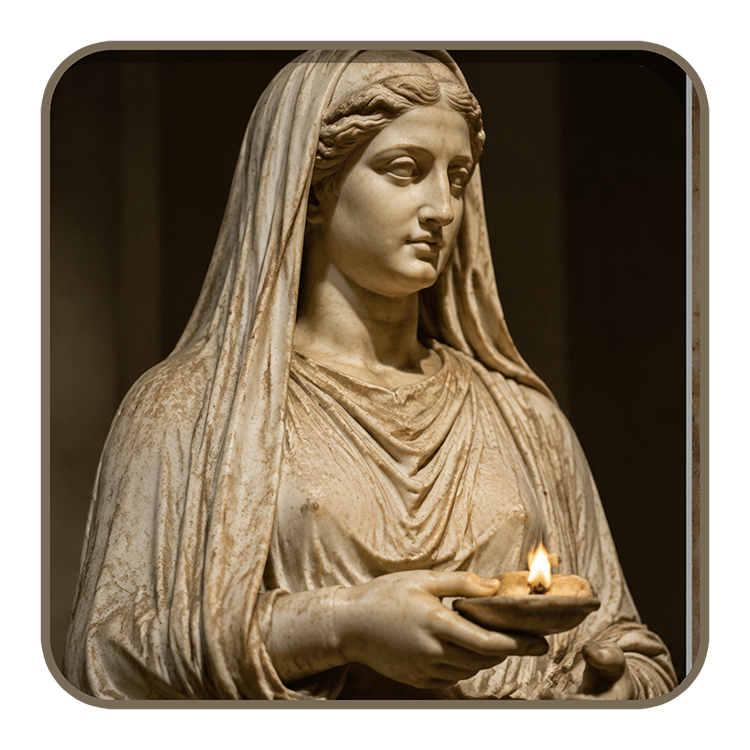
The flame was cared for by priestesses called the Vestal Virgins. There were normally six, chosen when they were young and serving for thirty years. Their duties included keeping the sacred fire burning and preparing materials used in important religious ceremonies. Their rules were extremely strict, but they also had unusual privileges. Vestals could own property and make wills, received honoured seats at public events and were treated with enormous respect. Their home, the House of the Vestals, stood beside Vesta’s temple.
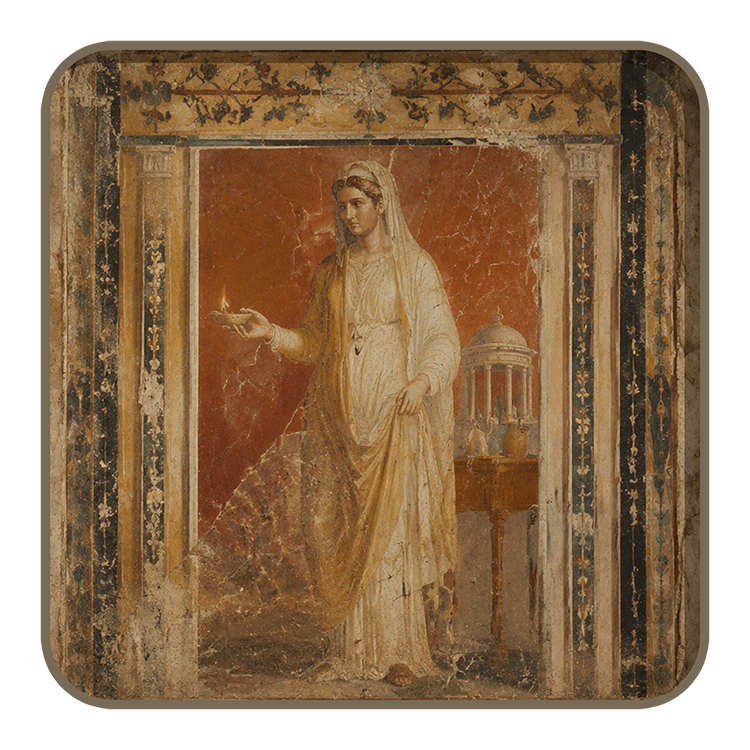
Vesta’s main festival was the Vestalia in June. During part of the celebration, married women could enter an inner area of her temple that was normally restricted. Bakers and millers also took part because bread depended on grain, ovens and fire. Donkeys used to turn millstones could even be decorated with flowers and small loaves. Unlike many gods, Vesta was not usually represented by a huge human-shaped statue inside her temple. The sacred flame itself was her clearest presence. That makes her unusual and, to me, rather brilliant. A Roman could understand her importance every time somebody cooked a meal or gathered around a warm hearth. Her power was not about defeating monsters. It was about keeping the fire alive so that homes, families and ultimately Rome itself could continue.






Hi! I’m Jocelyn, and I created Mythfits Society to make discovering ancient myths easier, more interesting and much more fun.
Read My Story