



Venus was the Roman goddess of love, beauty, desire, fertility and success. Romans connected her closely with the Greek Aphrodite and retold famous Greek stories about her, including her birth from sea foam and her relationship with Mars. In one comic myth, Venus is married to Vulcan but secretly meets Mars. Vulcan discovers them and traps the pair inside an almost invisible metal net. Roses, myrtle, doves and sparrows became connected with Venus, and her son Cupid often appears beside her in Roman art.
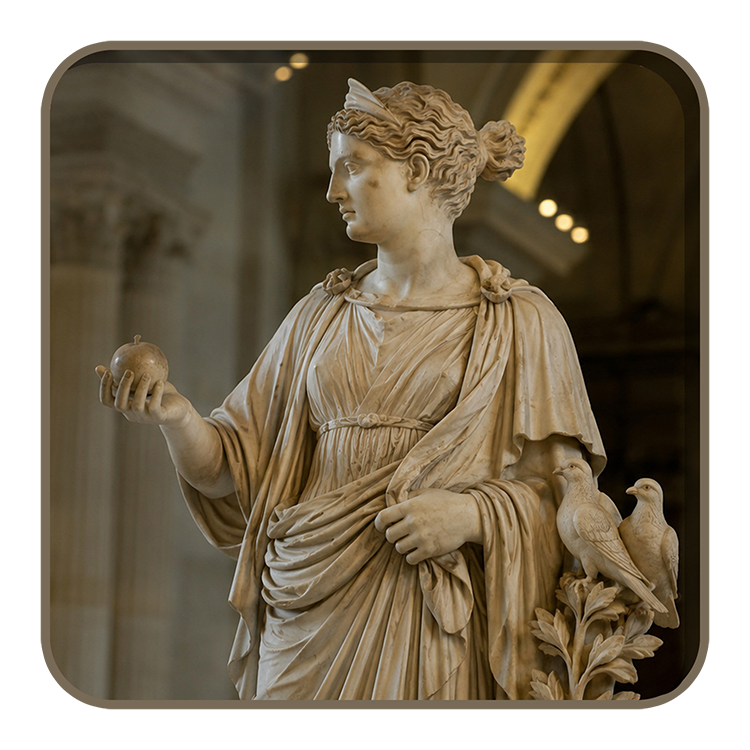
Venus became especially important to Rome through her son Aeneas. His father was the mortal Anchises. After Troy was destroyed, Aeneas escaped and began the journey that eventually took him to Italy. In Virgil’s Aeneid, Venus repeatedly helps her son when he is in danger. Aeneas’s descendants were later connected with Romulus and Remus, making Venus an ancestor of the Roman people. Julius Caesar’s family claimed descent from her through Aeneas and his son Ascanius. Caesar even built a temple to Venus Genetrix, meaning ‘Venus the Mother’.
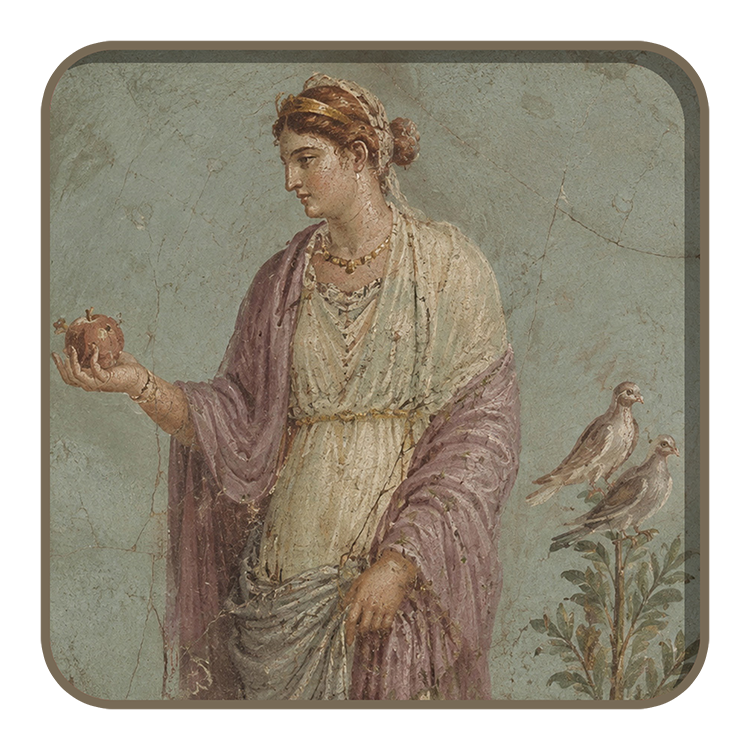
Venus had several different Roman titles. Venus Victrix was ‘Venus the Victorious’, while Venus Verticordia was believed to guide people towards proper behaviour in love. Her festival, the Veneralia, took place on 1 April. Pompeii was particularly devoted to Venus and treated her as a protector of the city. Beautiful paintings of her survived there beneath the ash from Mount Vesuvius. The bright planet Venus was named after the goddess because its beauty seemed to suit her. I think Venus is much more interesting when we look beyond romance. Love was certainly part of her power, but so were family, fertility, gardens, success and Rome’s legendary ancestry. A goddess who begins in stories about attraction ends up helping explain where an entire empire believed it came from.





Hi! I’m Jocelyn, and I created Mythfits Society to make discovering ancient myths easier, more interesting and much more fun.
Read My Story