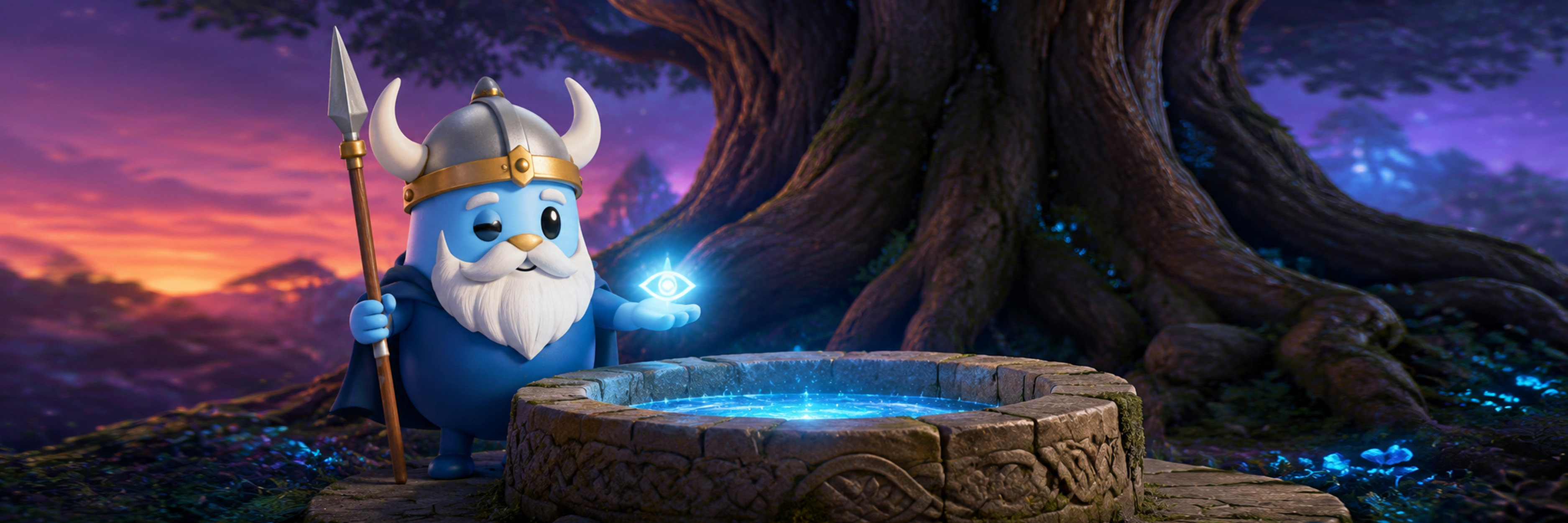
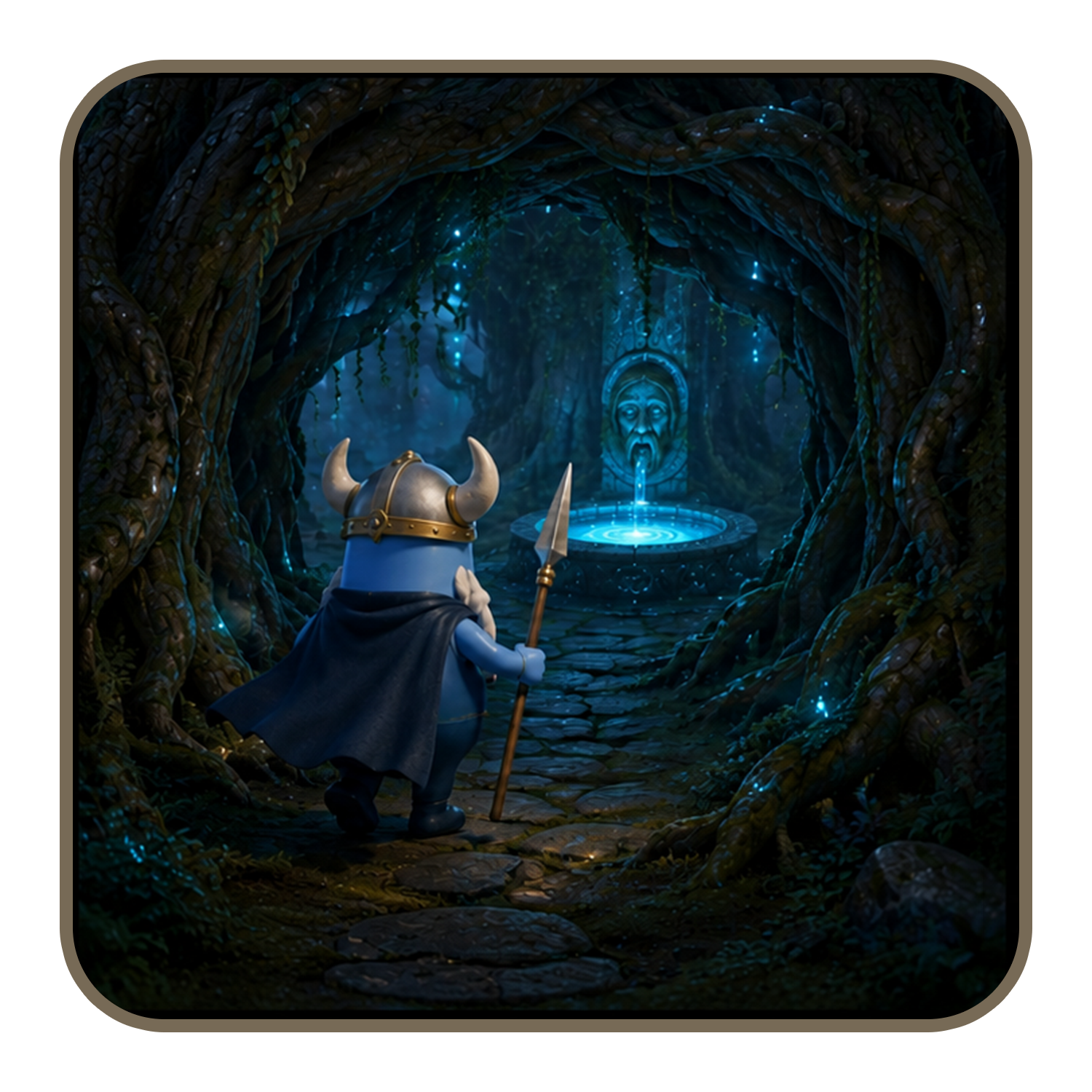
 Odin is always searching for wisdom, and Norse mythology makes him pay for it. He gives one eye for a drink from Mímir’s well and later hangs for nine nights on Yggdrasil, wounded by a spear and offered to himself. At the edge of death, he discovers the runes. These stories are not instructions to copy. They are powerful myths about the frightening price Odin accepts because knowledge matters more to him than comfort or safety.
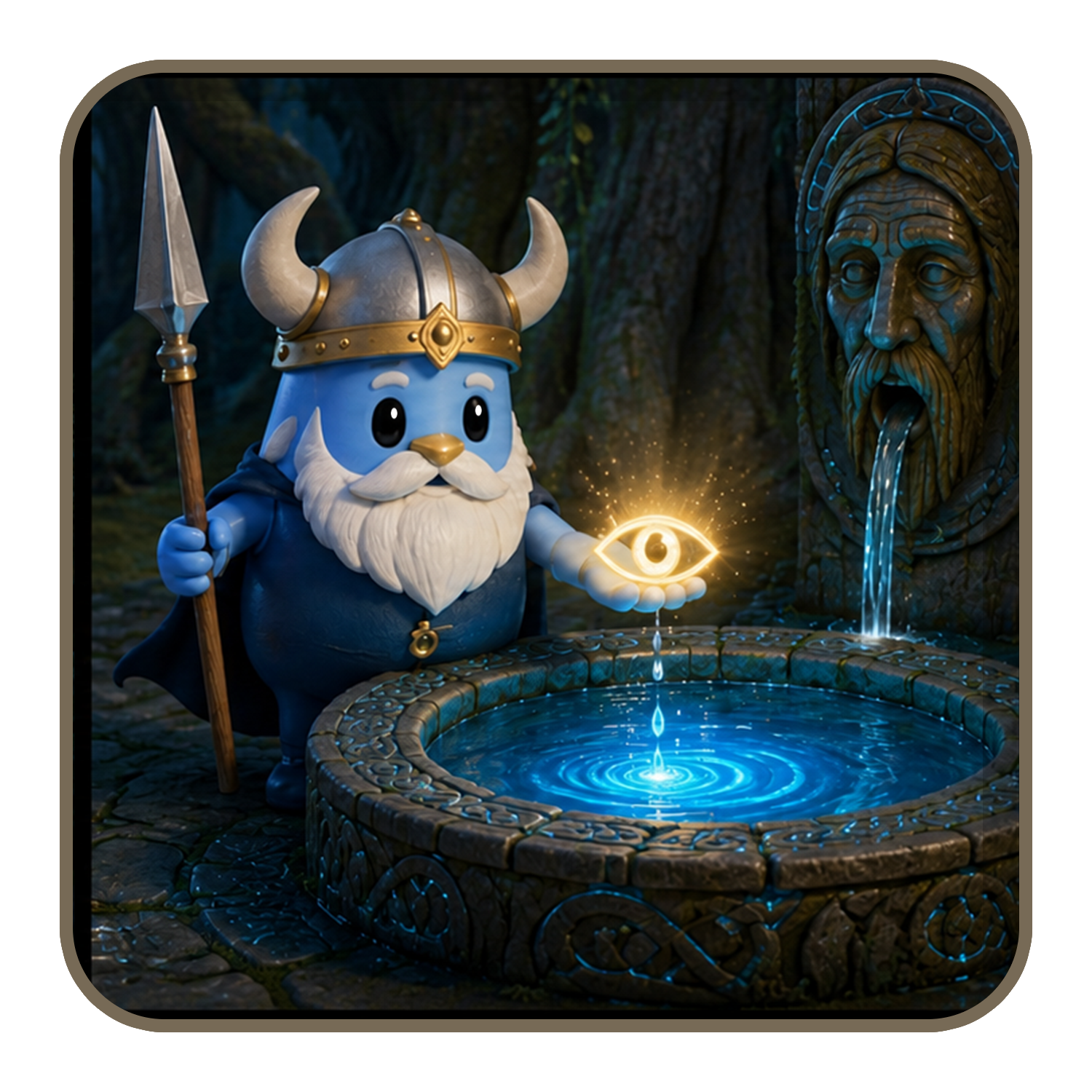 The myth never describes an operation or says which eye he loses. Artists usually show a patch or an empty socket, but those are visual choices. The important exchange is sight for deeper insight. Odin gives up part of ordinary vision to gain knowledge beyond what ordinary eyes can see.
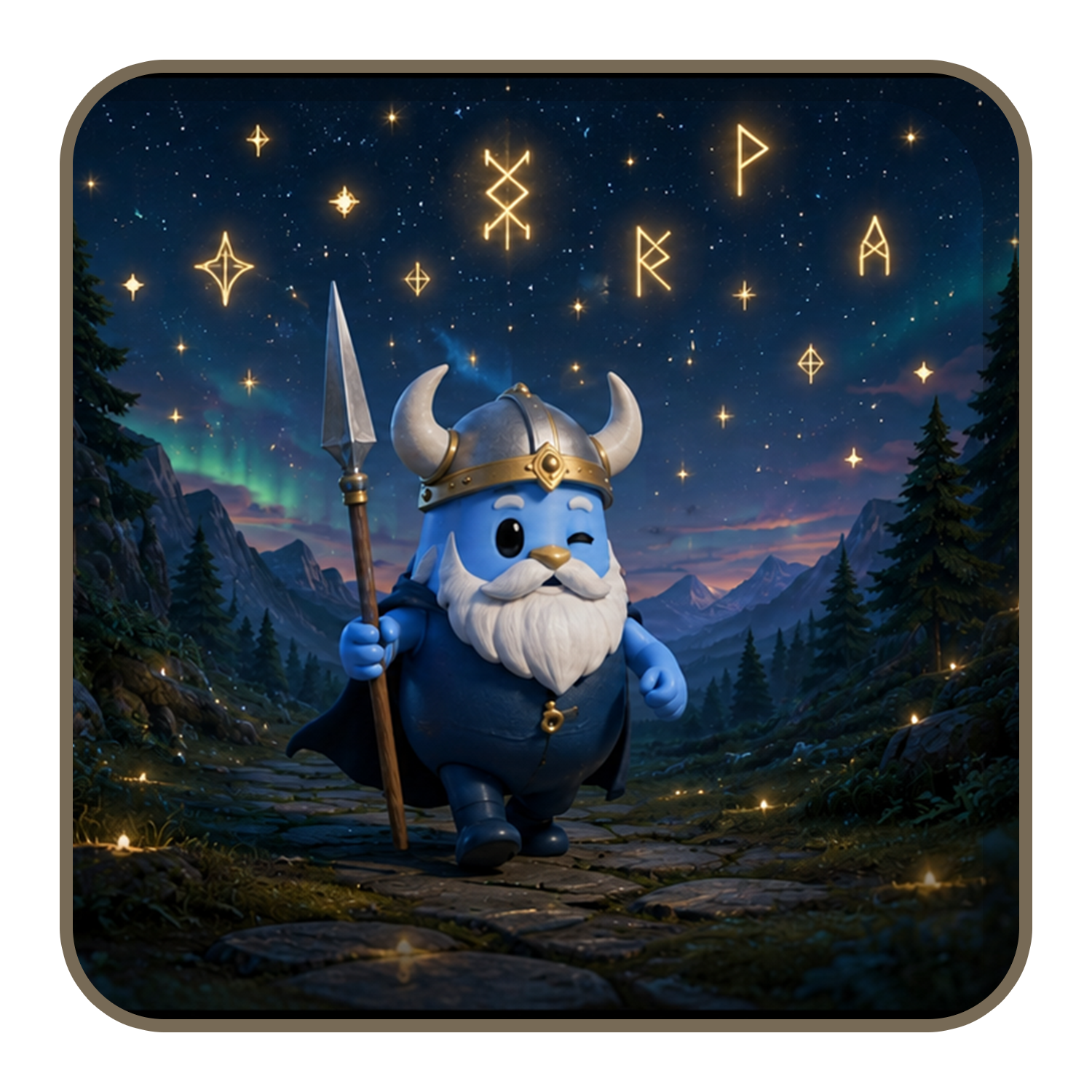 The phrase “myself to myself” makes the ritual especially strange. Odin is both the god receiving the offering and the victim being offered. Hanging and the spear are connected with Odin elsewhere too. His ordeal provides magical knowledge, not simply proof that he is tough.

Hi! I’m Jocelyn, and I created Mythfits Society to make discovering ancient myths easier, more interesting and much more fun.
Read My Story