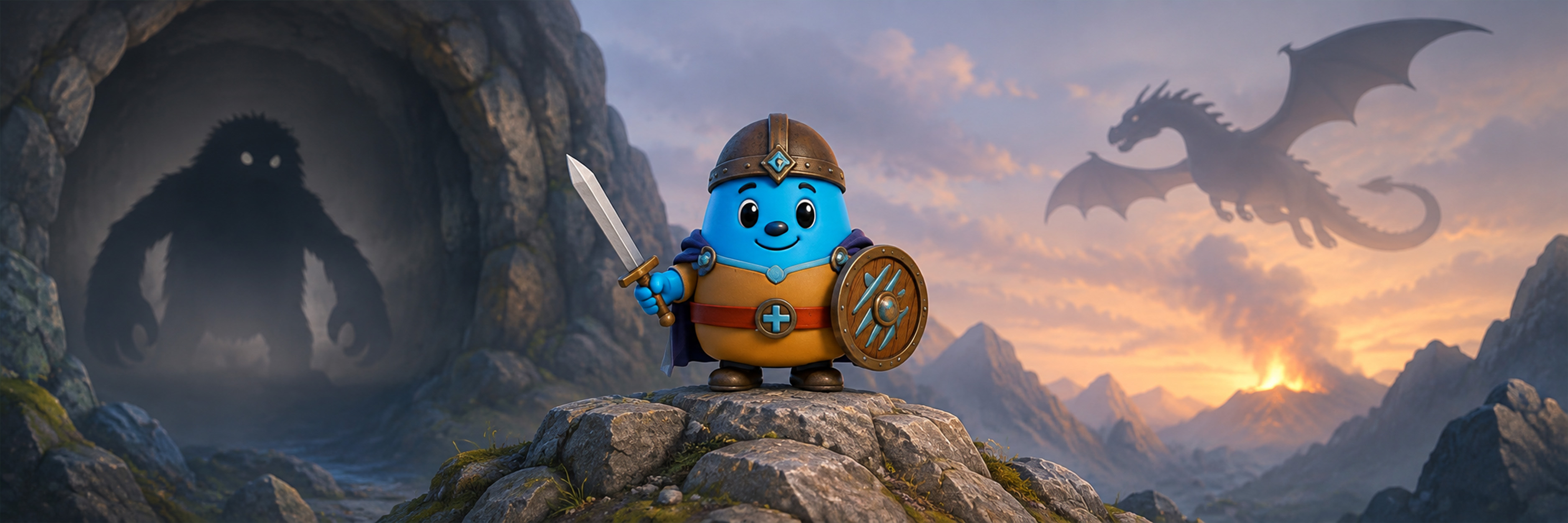
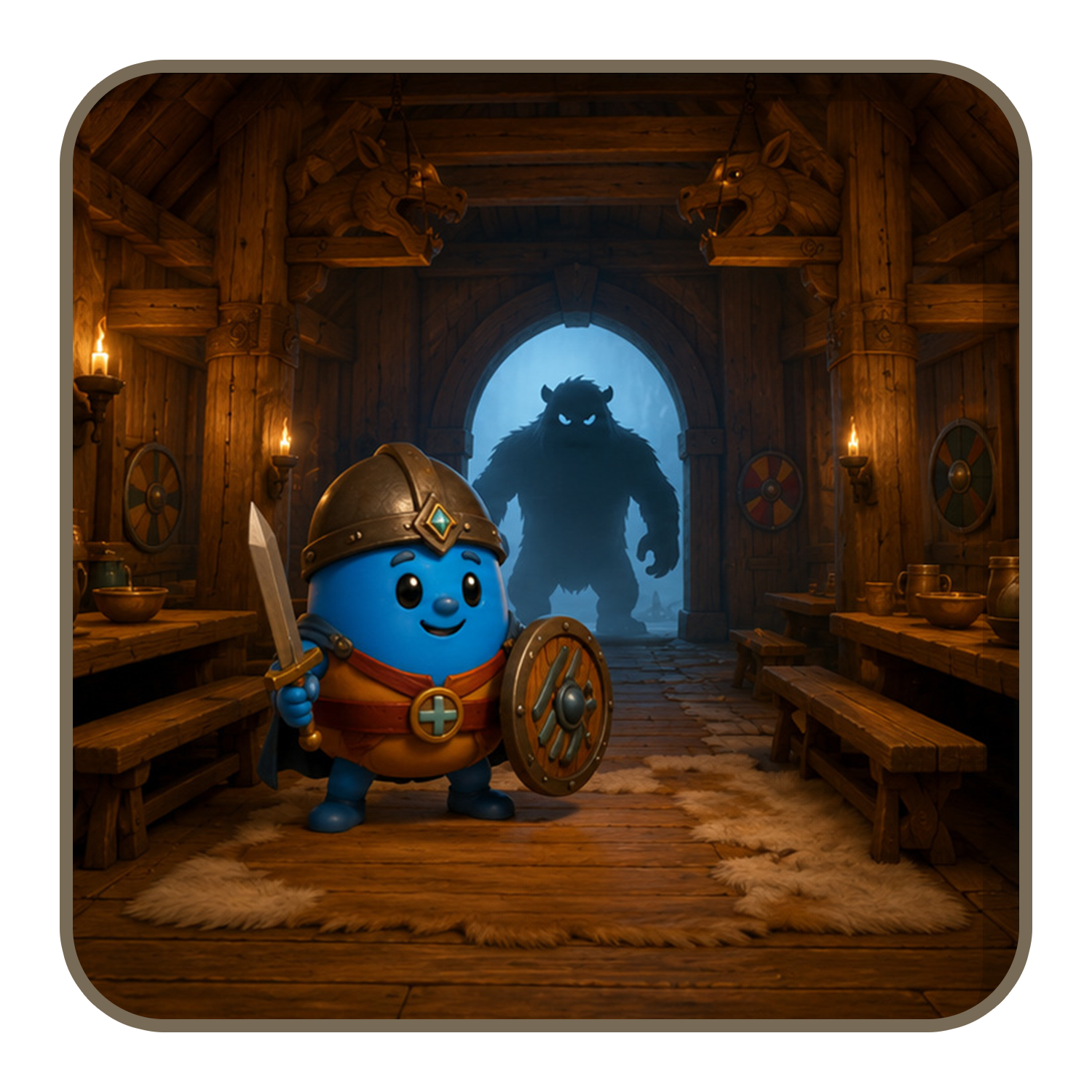
 Beowulf fights three great enemies during his life: Grendel, Grendel’s mother and a treasure-guarding dragon. Each battle is different. Against Grendel, he is a young warrior proving his strength. In the underwater hall, he survives because he spots a giant-made sword. Against the dragon, he is an ageing king protecting his people even though the fight will kill him. I love the action, but the poem uses the monsters to ask a larger question: does being a great fighter automatically make somebody a great leader?
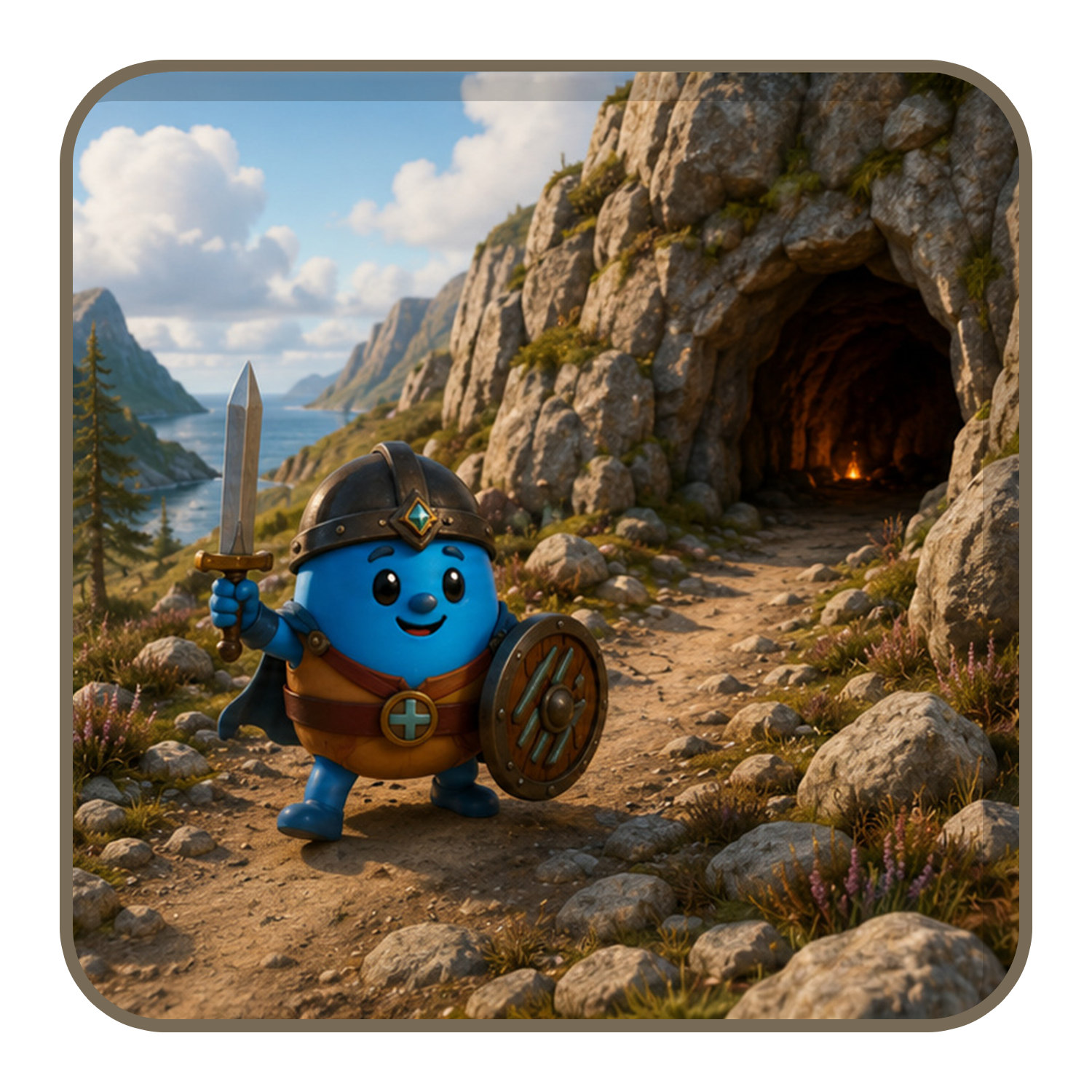 The epic survives in one Old English manuscript copied around the year 1000. Its story is set in Denmark and Geatland centuries earlier. The poet combines pre-Christian heroic legends with Christian ideas, including the claim that Grendel descends from the biblical Cain. Nobody knows the poem’s original title or exactly when it was first composed. The Danish king Hrothgar builds Heorot, a magnificent hall where warriors gather, feast and listen to poetry. The noise torments Grendel, who comes from the marshes at night and carries men away. The attacks continue for twelve years. Beowulf, a young Geat, hears of the disaster and sails to Denmark with companions.
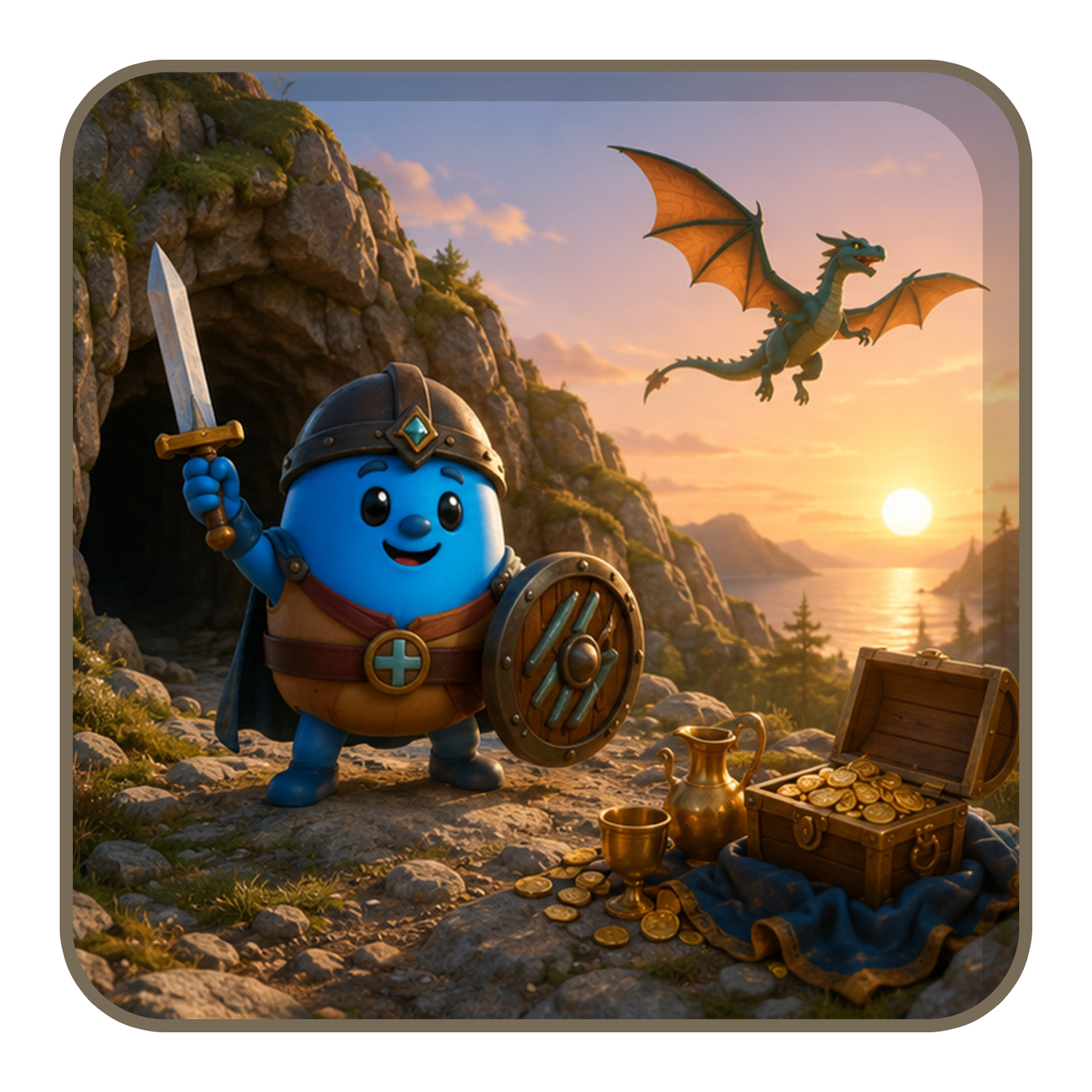 The Danes hang the arm in Heorot and celebrate. Yet the victory creates a new crisis. Grendel’s mother attacks to avenge her son, killing Hrothgar’s trusted adviser Æschere. She takes back Grendel’s arm and returns to a mere surrounded by cliffs, tangled trees and strange creatures. Beowulf dives into the water wearing armour and carrying Hrunting, a famous sword lent by Unferth. Grendel’s mother drags him into her hall. Hrunting cannot wound her, and she throws Beowulf to the floor. His mail shirt saves him from her knife.



Hi! I’m Jocelyn, and I created Mythfits Society to make discovering ancient myths easier, more interesting and much more fun.
Read My Story