
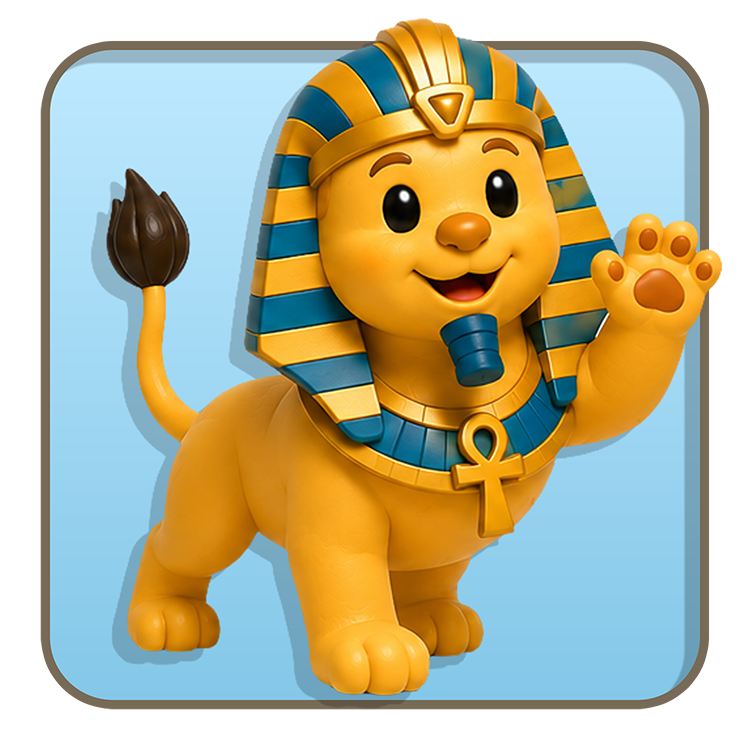
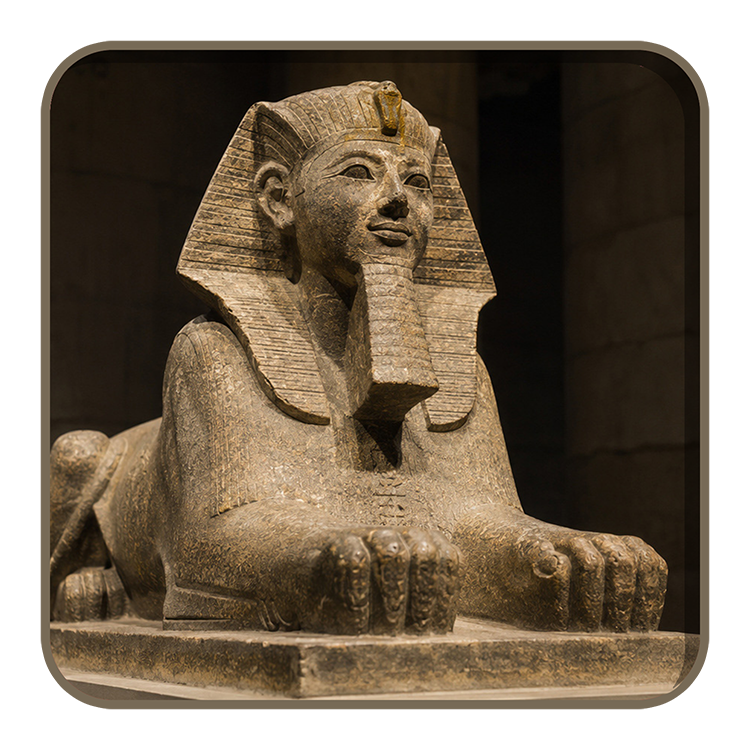
The Great Sphinx was carved directly from limestone bedrock at Giza during the Old Kingdom, probably around 2500 BCE. Most Egyptologists connect it with Pharaoh Khafre because it stands beside his pyramid causeway and valley temple, and its style fits his period. However, no surviving inscription from Khafre's reign says plainly that he ordered it. Archaeological context provides the strongest case, while alternative dates and owners remain popular subjects for debate. The monument is enormous, about 73 metres long and 20 metres high. Its head was carved from harder layers of limestone than parts of the body, which have suffered more erosion. Stone removed while shaping the enclosure was used in nearby temple walls. The Sphinx probably once had brightly painted surfaces. Traces of colour survived around the face and headdress, reminding us that Egyptian monuments did not originally look like bare sandy stone.
Between the paws stands the Dream Stela of Thutmose IV, placed there more than a thousand years after the Sphinx was made. Its inscription tells how the young prince rested beside the monument, which was partly buried in sand. The Sphinx appeared in a dream and promised him kingship if he cleared the sand away. Thutmose later became pharaoh and set up the stela. The story linked his right to rule with the ancient guardian and Sun god. By the New Kingdom, the Great Sphinx was worshipped as Hor-em-akhet, meaning 'Horus in the Horizon'. It was also connected with Ra-Horakhty. Temples and stelae show that people visited the area long after the pyramids were built. Other sphinxes lined processional roads or guarded temple entrances.
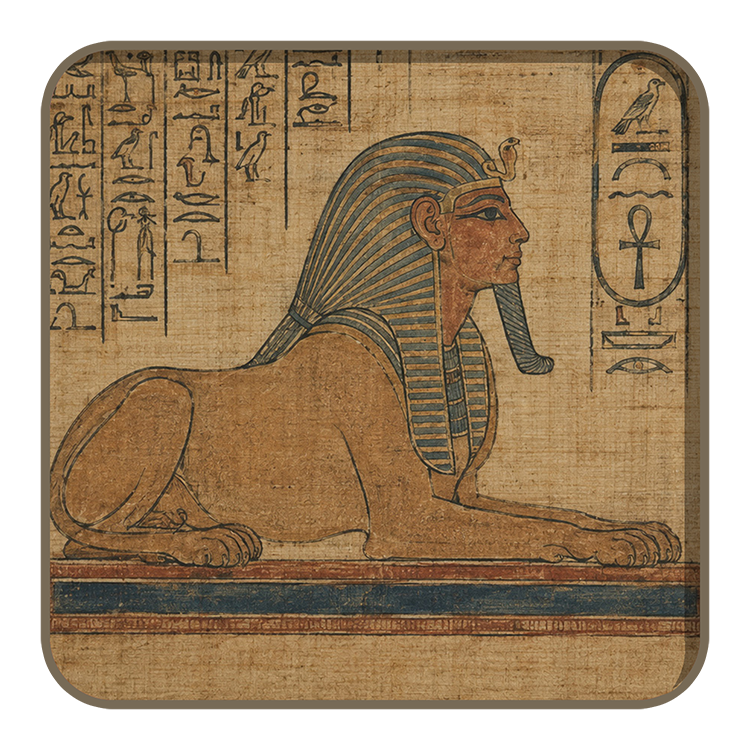
Some had a ram's head linked with Amun, while others carried the face of a queen or king. Sphinxes could express the power of different divine and royal figures. The Great Sphinx has lost its nose. A popular story claims Napoleon's soldiers shot it off, but drawings made before Napoleon arrived already show it missing. A fifteenth-century writer blamed a man who damaged the monument in the 1300s, although the exact event cannot be proved completely. The ceremonial beard also broke away; fragments are held in Cairo and the British Museum. Weathering, sand, stone quality and human actions have all affected the monument.





Hi! I’m Jocelyn, and I created Mythfits Society to make discovering ancient myths easier, more interesting and much more fun.
Read My Story