
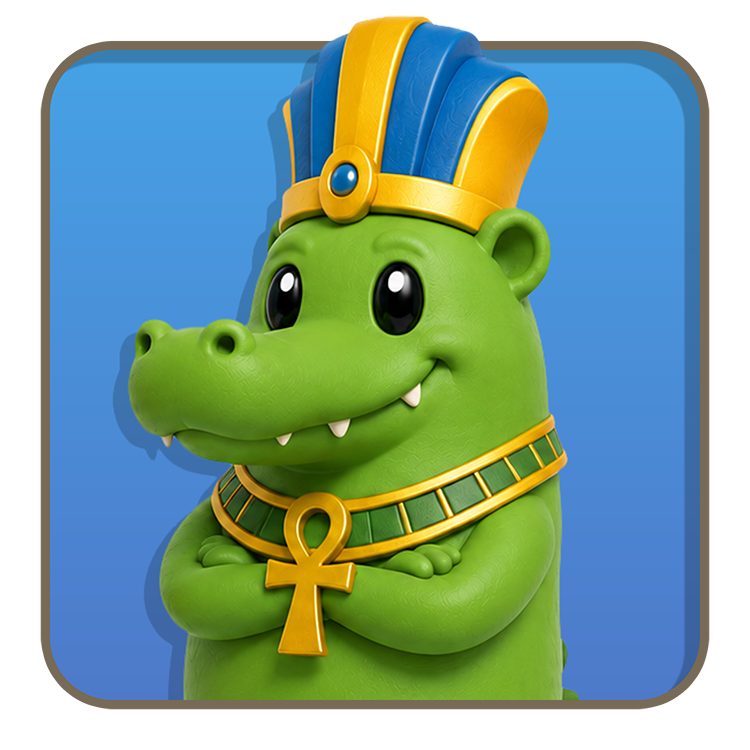
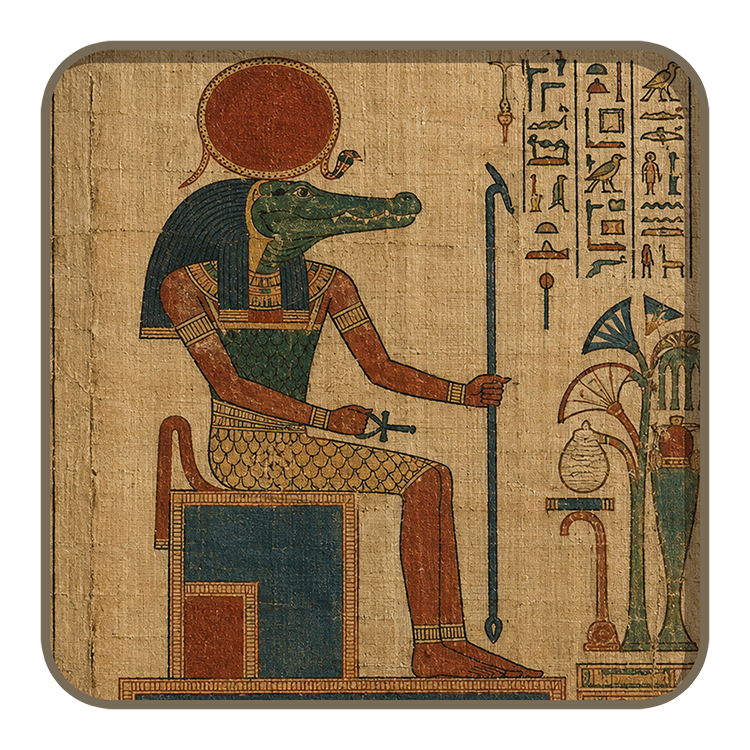
Sobek appears in the Pyramid Texts of the Old Kingdom, so his worship was very ancient. He became especially important in the Faiyum, a fertile region connected with a large lake. The city Greeks called Crocodilopolis had a sacred crocodile known as Petsuchos. Ancient accounts say it was decorated with jewellery and cared for by priests. When it died, it could be mummified and replaced by another sacred animal. During the Middle Kingdom, kings of the Twelfth and Thirteenth Dynasties strongly promoted Sobek. Amenemhat III built in the Faiyum, and several rulers included Sobek’s name in their own. The name Sobekneferu, used by one of Egypt’s earliest confirmed female pharaohs, means ‘Beauty of Sobek’. Linking with the crocodile god advertised control over strength, water and fertile land.
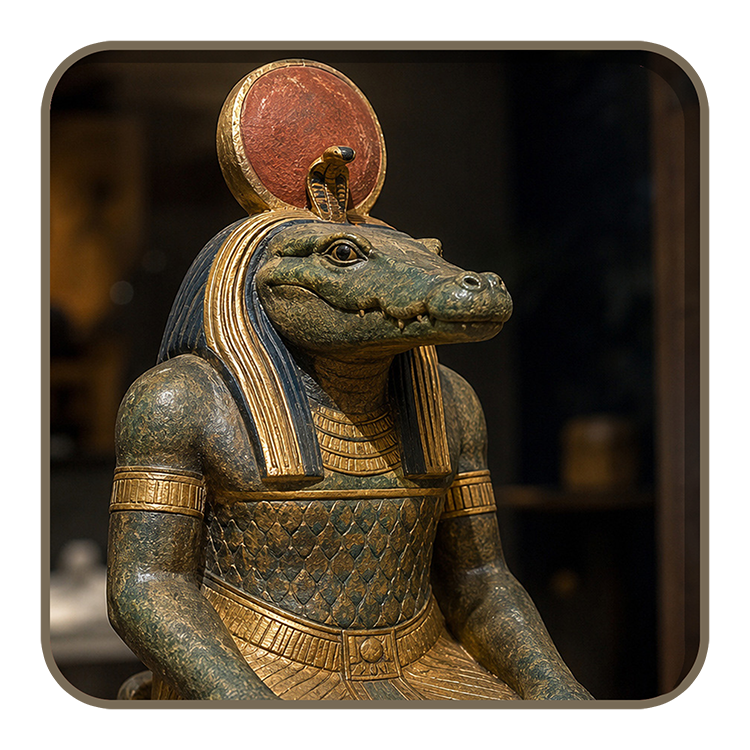
A ruler hoped to be as impossible to challenge as a crocodile in its own river. Sobek’s family changed between locations. He could be called the son of Neith, a very ancient goddess, and paired with Hathor, Renenutet or other goddesses. In some beliefs he helped gather pieces of Osiris’s body from the Nile. Elsewhere he was linked with Horus and royal protection. As Sobek-Ra, he gained a sun disc and solar qualities. These combinations did not replace the crocodile. They expanded what its power could mean. The magnificent temple at Kom Ombo was shared by two divine groups. One centred on Sobek, while the other centred on the falcon god Haroeris, a form of Horus the Elder.
The building has doubled entrances, courts and sanctuaries, creating an unusual balance between the gods. Nearby, archaeologists have found mummified crocodiles and eggs. Visitors can still see carved medical instruments on a temple wall, although the exact purpose of that scene is debated. Crocodile behaviour helped shape Sobek’s character. The animals can lie almost motionless and then attack with explosive speed. They guard territory, and females protect nests and carry hatchlings carefully in their mouths. Egyptians observed animals closely, even when their explanations were not modern zoology. A crocodile could therefore stand for ferocity and unexpectedly careful protection. People living near the Nile needed both caution and respect.



Hi! I’m Jocelyn, and I created Mythfits Society to make discovering ancient myths easier, more interesting and much more fun.
Read My Story