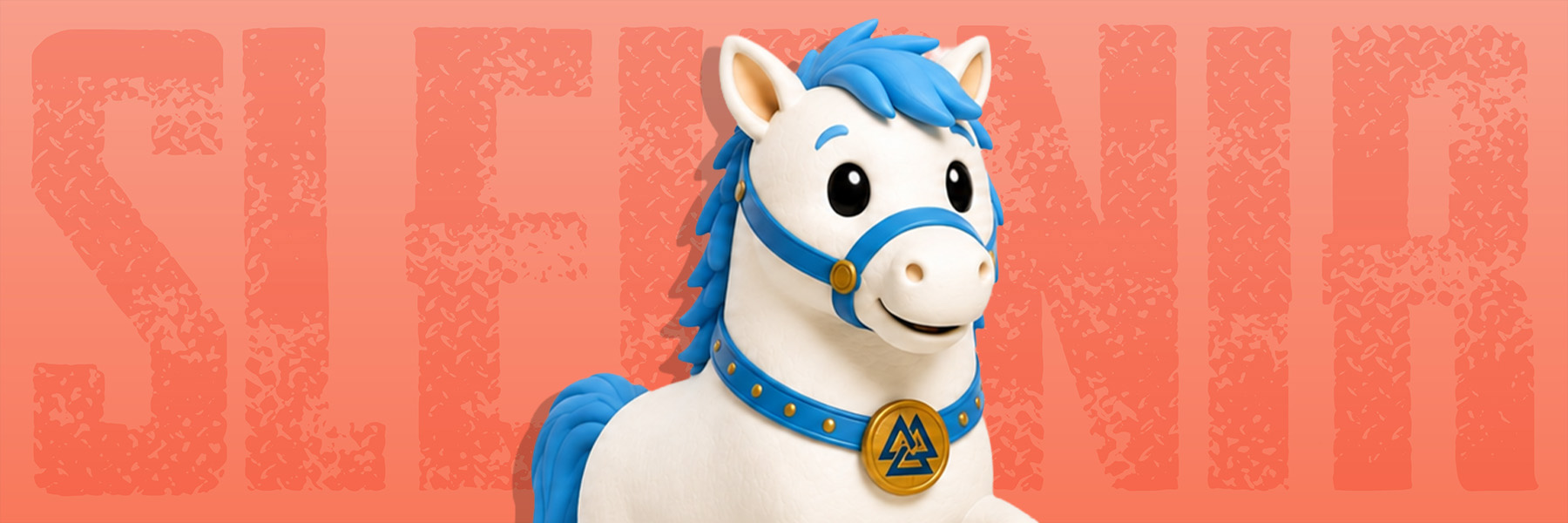
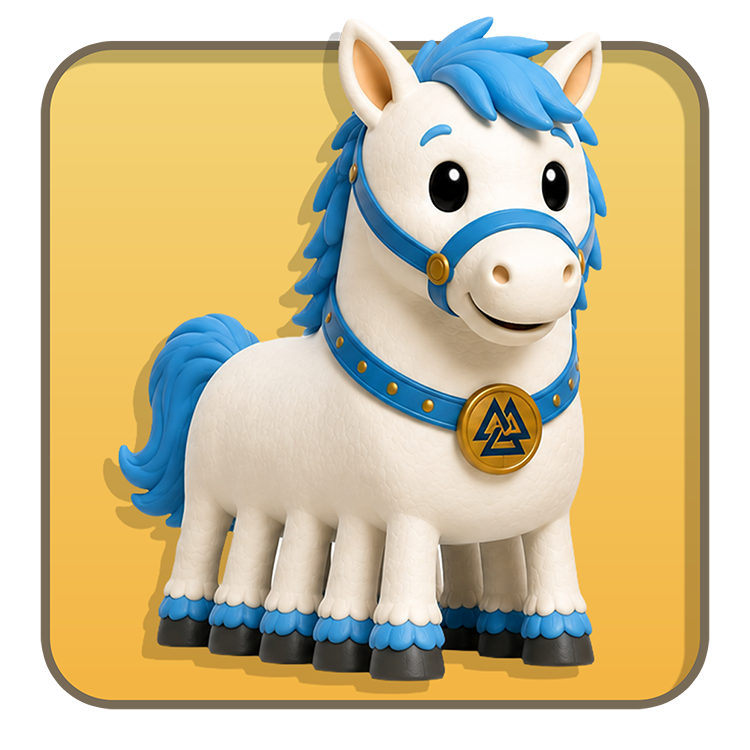
Sleipnir is born during the building of Asgard’s defensive wall. A mysterious builder offers to finish the fortification in a single winter. His requested payment is the goddess Freyja, the Sun and the Moon. The gods agree only if he works without human help and completes everything by the first day of summer. Loki persuades them to let him use his stallion, Svadilfari. Svadilfari is so strong that the builder moves enormous stones and comes frighteningly close to meeting the deadline. The gods realise they may lose Freyja and the lights of the sky. They blame Loki for the bad agreement and demand that he stop the work. Loki changes into a mare and lures Svadilfari away into the forest. Without his horse, the builder fails.
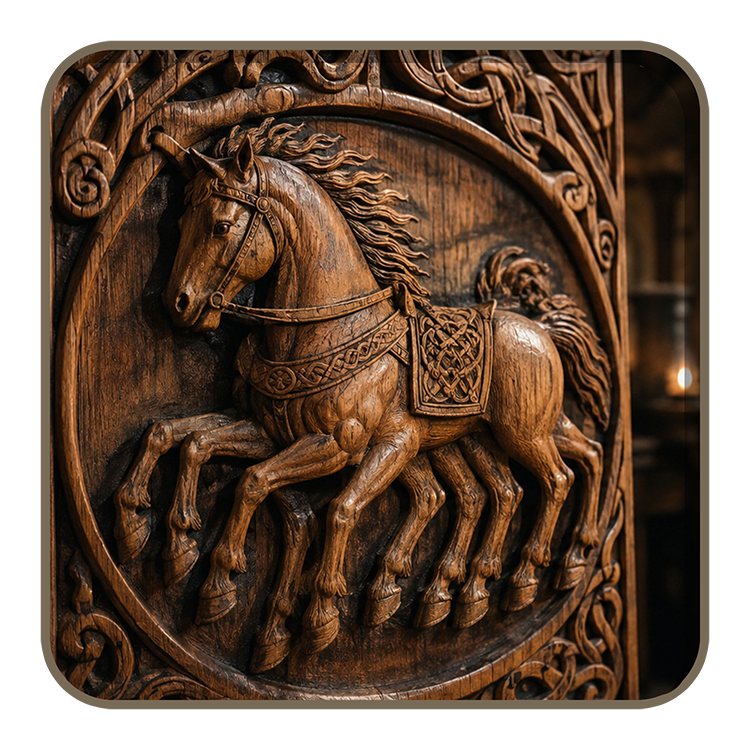
His disguise drops, revealing that he is a jötunn, and Thor kills him with Mjolnir. Some time later, Loki returns with a grey foal that has eight legs. He gives Sleipnir to Odin. The story makes Loki both father of several dangerous beings and mother of the gods’ finest horse. Norse myths often allow shape-changing to cross ordinary boundaries, and Loki’s transformations are more complete than simply putting on a costume. Odin rides Sleipnir on important journeys. In the poem Baldrs draumar, he saddles the horse and travels down to Hel to question a dead seeress about Baldr’s troubling dreams. After Baldr dies, Hermod borrows Sleipnir and rides for nine nights towards Hel. The horse leaps over the gate when it cannot be opened, showing that even the boundary of death cannot stop him.
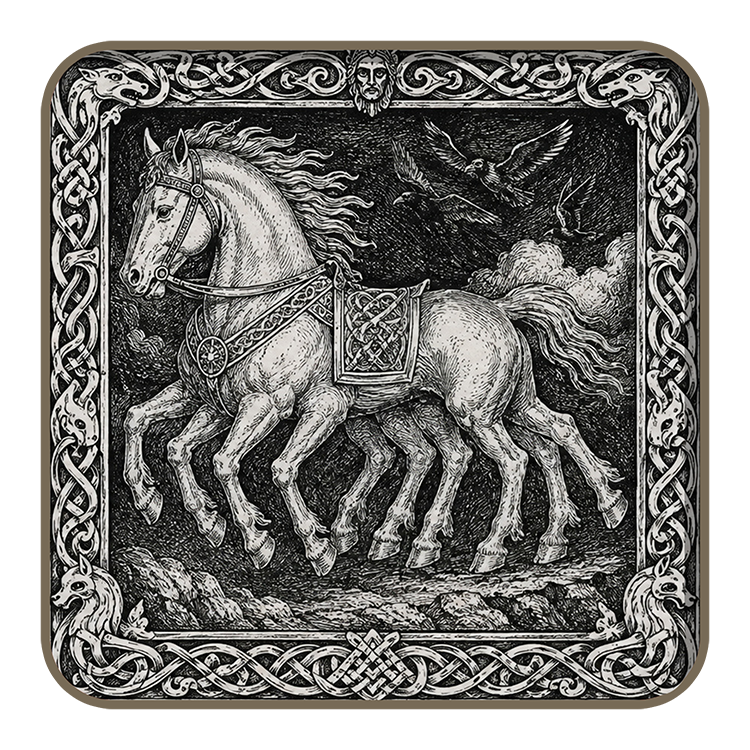
Another tale sets Sleipnir against the giant Hrungnir’s horse Gullfaxi. Odin boasts that no horse in Jotunheim can match Sleipnir and races Hrungnir towards Asgard. The chase brings the giant inside the gods’ stronghold, where he becomes drunk and threatening. The race is exciting, but Odin’s boasting creates a new danger for everyone else to solve. Sleipnir also appears in poetic descriptions of ships and roads. The famous image called the Tjängvide stone from Gotland shows a rider on an eight-legged horse approaching a hall. Many people identify the pair as Odin and Sleipnir, although interpreting ancient pictures always requires care.




Hi! I’m Jocelyn, and I created Mythfits Society to make discovering ancient myths easier, more interesting and much more fun.
Read My Story