

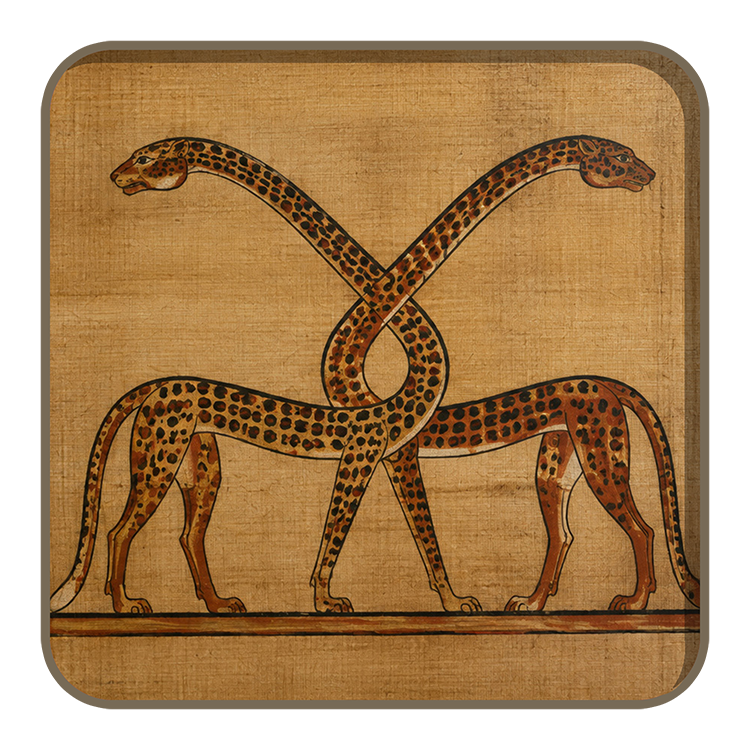
The most famous pair appears on the Narmer Palette, made around 3100 BCE. Two men hold ropes attached to the animals, whose long necks curl around each other and form a circle. That hollow circle is where cosmetics might have been ground on an ordinary palette. However, the Narmer Palette is far too large and elaborate for everyday make-up. It was probably a ceremonial object placed in a temple at Hierakonpolis. Elsewhere on it, King Narmer defeats enemies and wears crowns linked with Upper and Lower Egypt. Because the handlers control the creatures, many scholars think the scene expresses order over wild or dangerous forces. The intertwined necks may also suggest two things being joined, which fits a palette celebrating royal control. It is tempting to say they definitely represent the unification of Upper and Lower Egypt, but the image has no surviving caption that proves this.
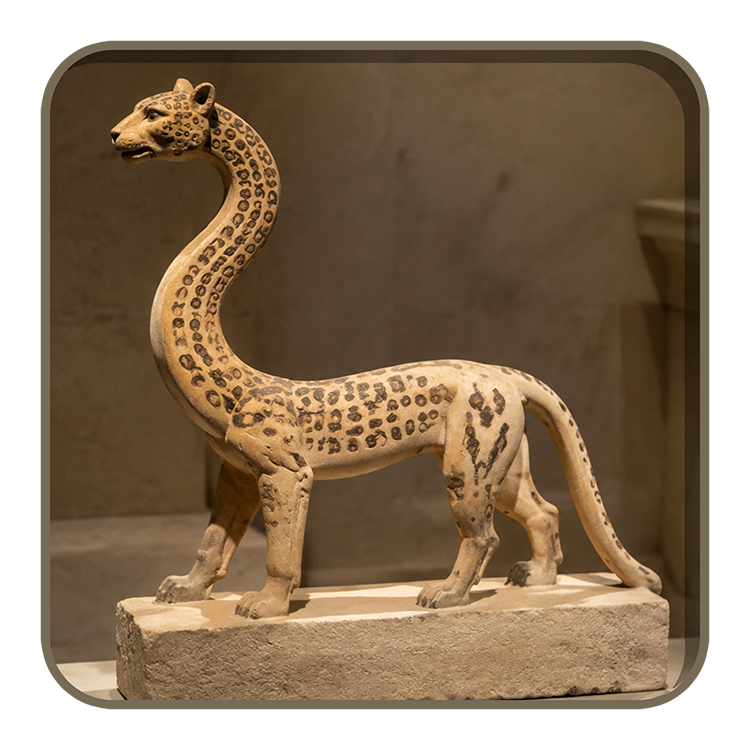
Good history sometimes means admitting where certainty ends. The scene clearly shows control and symmetry, while its exact message remains debated. Similar long-necked cats appear on other late prehistoric Egyptian objects, including the Two Dog Palette. They also occur in Mesopotamian art, where pairs of fantastic animals were arranged in balanced designs. Egypt and western Asia exchanged goods and artistic ideas during this period. Materials, seal designs and vessel shapes travelled along trade routes. Egyptian artists could borrow a visual idea and give it a meaning that suited their own rulers and temples. Borrowing a creature did not mean copying an entire religion. The word serpopard was invented much later by combining serpent and leopard. That name is handy, but it can mislead us. The animal does not always have spots, and its neck is not literally a separate snake.
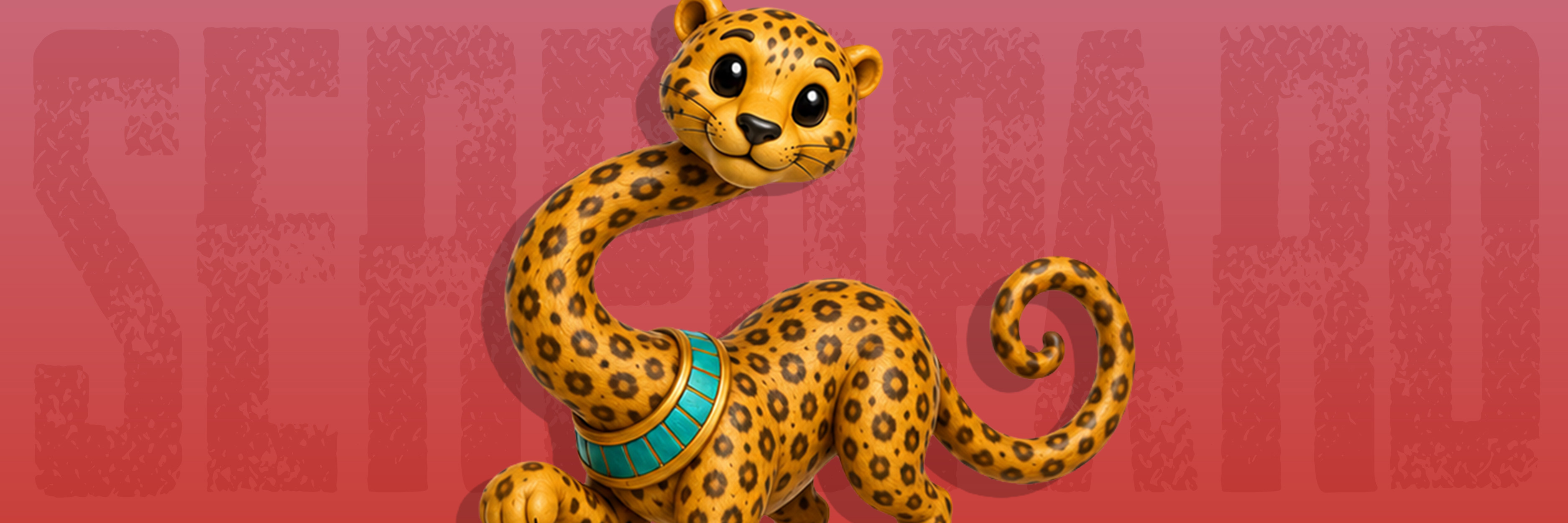
It may have been imagined as a lioness or another feline stretched into an impossible shape. Ancient artists often combined real animals to show powers that no ordinary creature possessed. Egyptian art later included griffins, winged snakes and other mixtures, although the classic serpopard became much less common. Unlike Ammit or the Sphinx, the serpopard has no preserved Egyptian story. It is not named in a papyrus, shown receiving temple offerings or described fighting a hero. Modern books and games sometimes invent a personality for it, but those versions are new.



Hi! I’m Jocelyn, and I created Mythfits Society to make discovering ancient myths easier, more interesting and much more fun.
Read My Story