
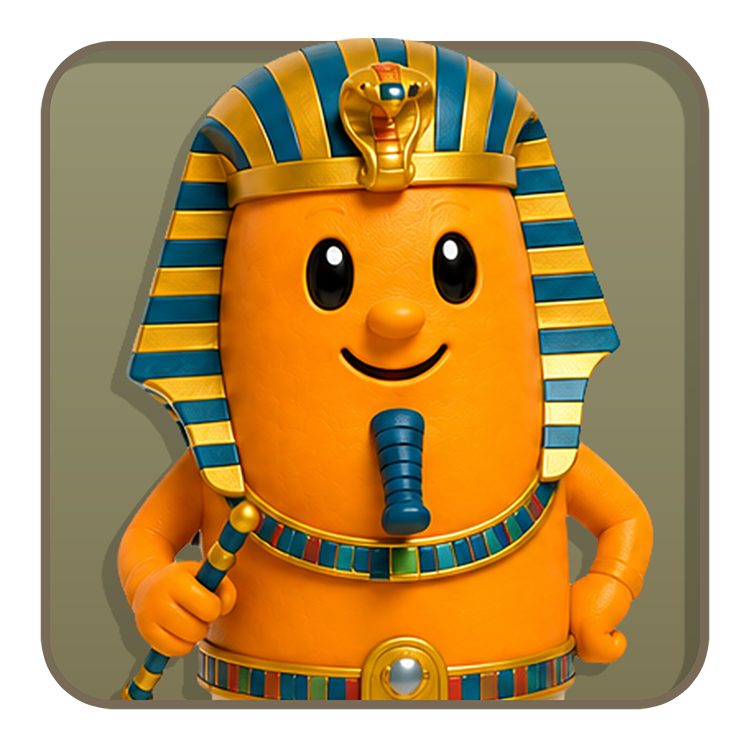
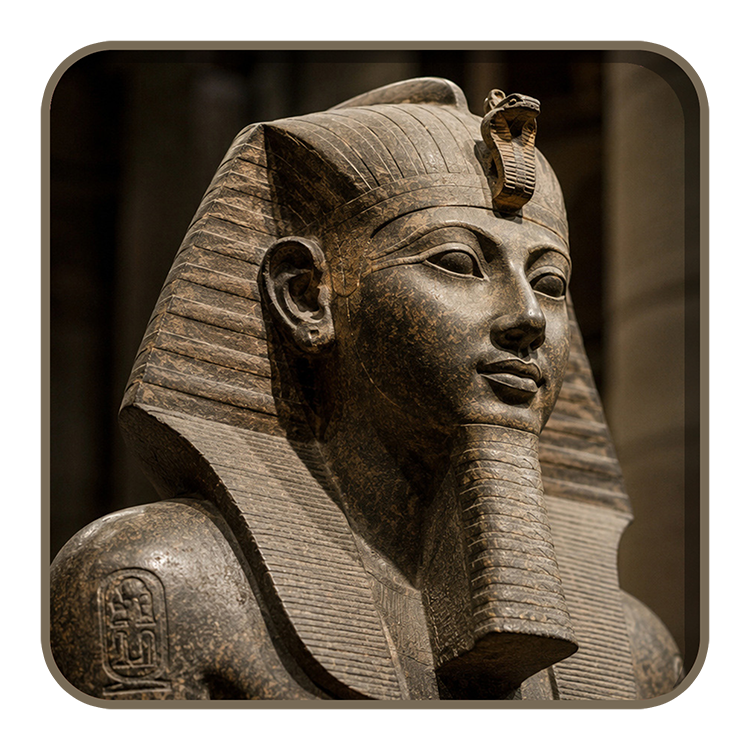
Ramesses was the son of Pharaoh Seti I and Queen Tuya. Before becoming king, he gained experience as crown prince and appeared beside his father on monuments. His family belonged to Egypt's Nineteenth Dynasty, founded after the religious upheaval of the Amarna Period. Ramesses married several women and had a very large family, probably more than one hundred children. His best-known queen was Nefertari. Her beautifully decorated tomb in the Valley of the Queens and her temple at Abu Simbel show the importance she held. Early in his reign, Ramesses fought the Hittite Empire for control of land in the eastern Mediterranean. His most famous battle took place near Kadesh, in modern Syria, around 1274 BCE. Egyptian accounts say the pharaoh was separated from part of his army, fought bravely and rescued the situation.
In reality, neither side won a clear victory, and the Hittites still held Kadesh afterwards. Ramesses covered temple walls with dramatic pictures and poems describing his courage, making the battle look like a magnificent Egyptian triumph. Years later, Egypt and the Hittites agreed to peace. Copies of their treaty survive in Egyptian hieroglyphs and on clay tablets in Akkadian, the diplomatic language used by many rulers of the time. The two powers promised not to attack one another and agreed to provide help if needed. Ramesses later married a Hittite princess, strengthening the relationship. This peaceful agreement mattered as much as any battle. It allowed both kingdoms to face other problems without continuing an expensive war. Ramesses was one of ancient Egypt's greatest builders.
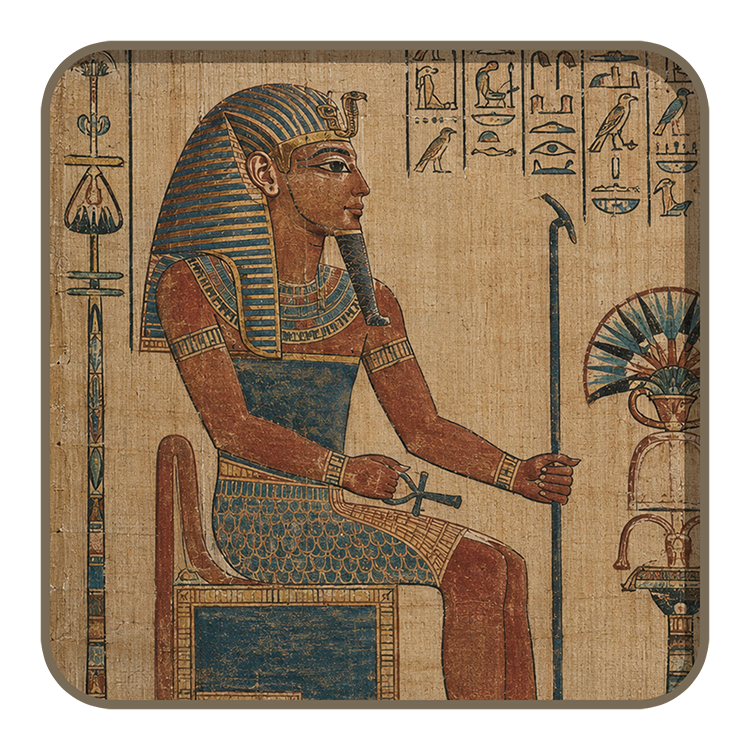
At Abu Simbel in Nubia, four colossal statues of him sit outside a temple cut into the rock. A smaller nearby temple honoured Nefertari and the goddess Hathor. He built the Ramesseum, his memorial temple near Thebes, and added to Karnak and Luxor temples. He also developed Pi-Ramesses, a royal city in the Nile Delta. Some monuments were newly made, while others were altered or had his name added to them. His huge building programme required planners, stonecutters, painters, transport crews, scribes and farmers who supplied food. These monuments were religious centres and powerful political messages. A visitor meeting a statue several times taller than a person was meant to feel the pharaoh's strength.



Hi! I’m Jocelyn, and I created Mythfits Society to make discovering ancient myths easier, more interesting and much more fun.
Read My Story