



Pluto was the Roman ruler of the underworld, the realm of the dead. Romans closely identified him with the Greek Hades, so most of his famous mythology comes from Greek tradition. He was a son of Saturn and Ops and brother of Jupiter and Neptune. After the older gods were defeated, the three brothers divided the cosmos: Jupiter ruled the sky, Neptune the sea and Pluto the world below. Pluto was serious and frightening, but he was not the Roman equivalent of a devil. He governed the dead according to fixed rules.
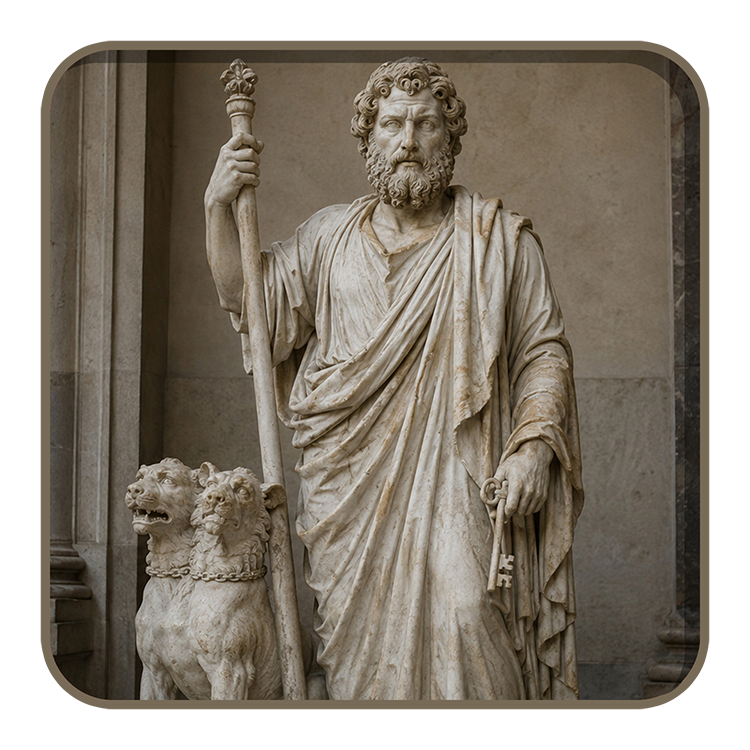
His most famous story concerns Proserpina, daughter of the grain goddess Ceres. Pluto carried Proserpina into the underworld to become his queen. Ceres searched desperately for her daughter and stopped crops from growing. Eventually Jupiter ordered Proserpina’s return, but because she had eaten pomegranate seeds below, she could not leave permanently. A compromise meant she spent part of the year with Ceres and part in Pluto’s kingdom. Her return became associated with renewed growth.
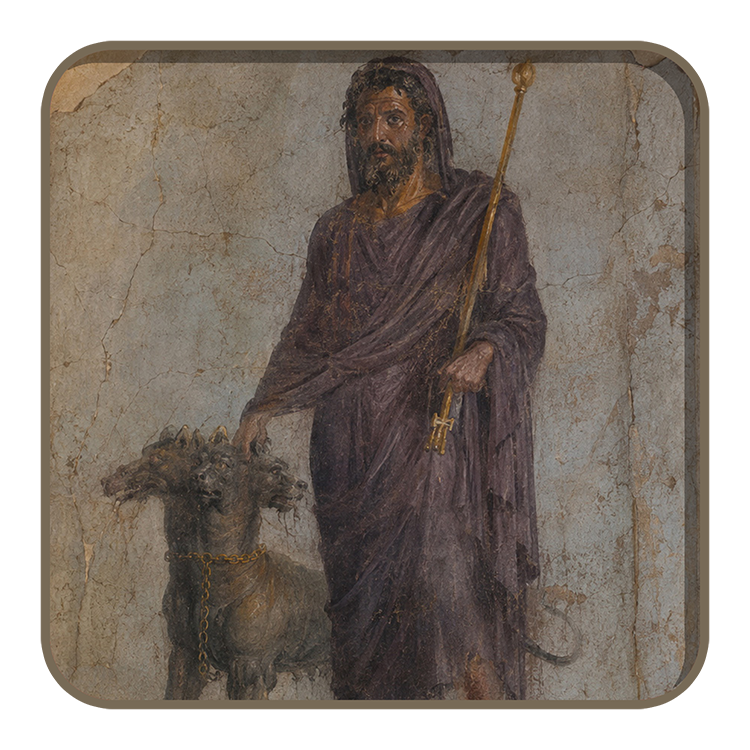
Pluto was also connected with wealth. Metals, gemstones and the roots of crops all existed beneath the soil, so the underground world contained treasure as well as graves. The Roman name Dis Pater, ‘Rich Father’, expressed a similar idea. Artists might show Pluto with a sceptre, keys, a cornucopia or the three-headed guard dog Cerberus. People approached underworld gods carefully, and Pluto received less cheerful public worship than gods such as Jupiter or Venus. The dwarf planet Pluto was named in 1930, partly because a distant, dark world seemed suited to the ruler below. I think the most useful way to understand him is to forget modern cartoon villains. Pluto represented something unavoidable and mysterious: the hidden world beneath the earth, where the dead travelled but where seeds, metals and riches also waited out of sight.




Hi! I’m Jocelyn, and I created Mythfits Society to make discovering ancient myths easier, more interesting and much more fun.
Read My Story