
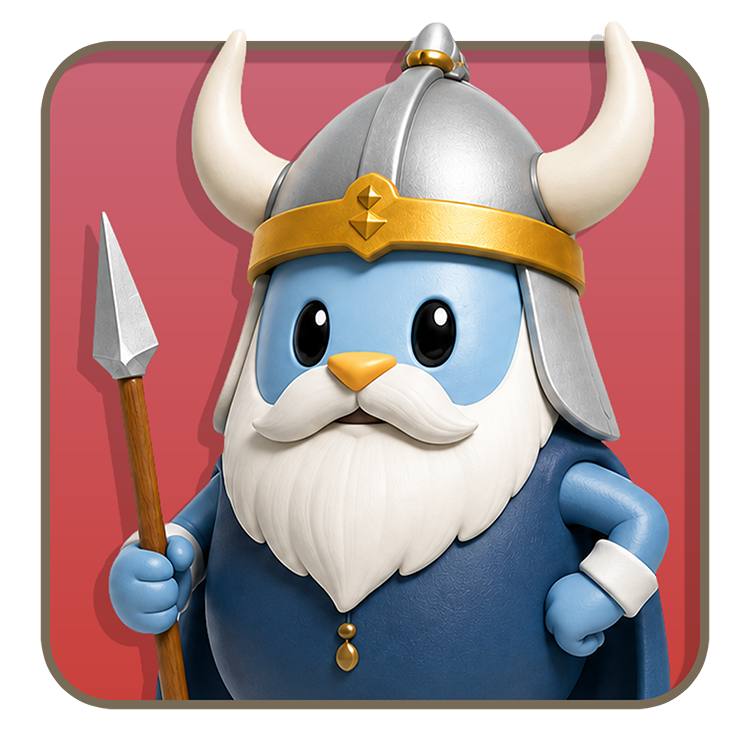
Most stories survive in the Poetic Edda and the Prose Edda, written down in thirteenth-century Iceland from older traditions. Odin was worshipped more widely among Germanic peoples and was called Woden in Old English. Wednesday means Woden’s day. He has an extraordinary number of names, including Allfather, Grimnir and the One-Eyed, because he travels in disguises and appears in many roles. Odin is the son of Borr and Bestla and brother of Vili and Ve. The brothers kill Ymir and form the world from his body. In Voluspa, Odin and two companions find Ask and Embla, the first human pair, and give them life and vital gifts. Snorri names the companions differently in his account. This variation reminds us that Norse mythology was not one book written by one author.
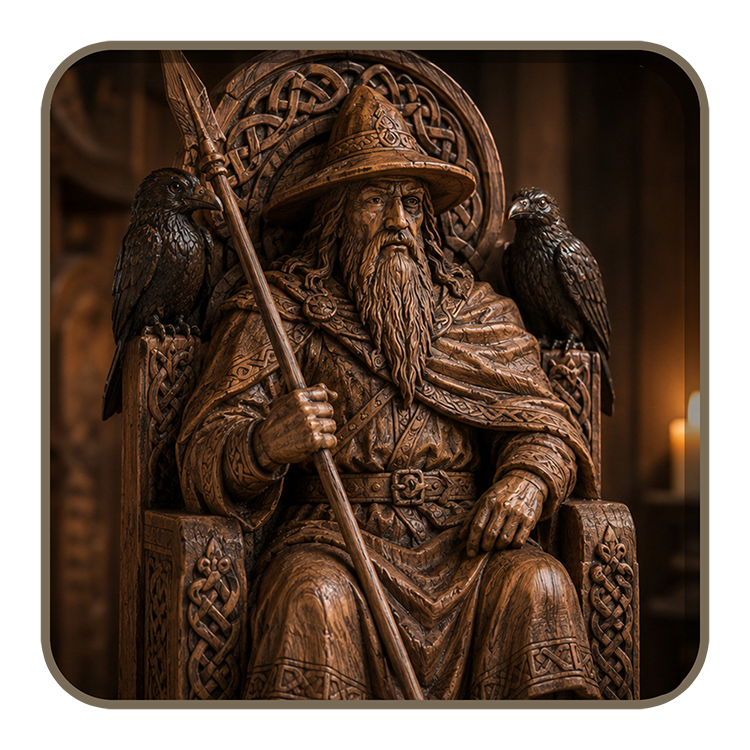
Wisdom always costs Odin something. He leaves one eye in Mimir’s well for a drink of deep knowledge. In Havamal, he hangs for nine nights on a windswept tree, wounded by a spear and offered to himself. At the edge of death, he discovers the runes. He also steals the Mead of Poetry from the jötunn Suttung, using disguises, persuasion and transformation. The tale shows that Odin can be clever and dishonest as well as brave. Warriors who die in battle may be chosen by Valkyries. Odin receives some in Valhalla, while Freyja receives others in Folkvangr. In Valhalla the einherjar train for Ragnarök, fight each day and feast each night. Odin needs them for the final conflict, but even this preparation cannot prevent his fate.
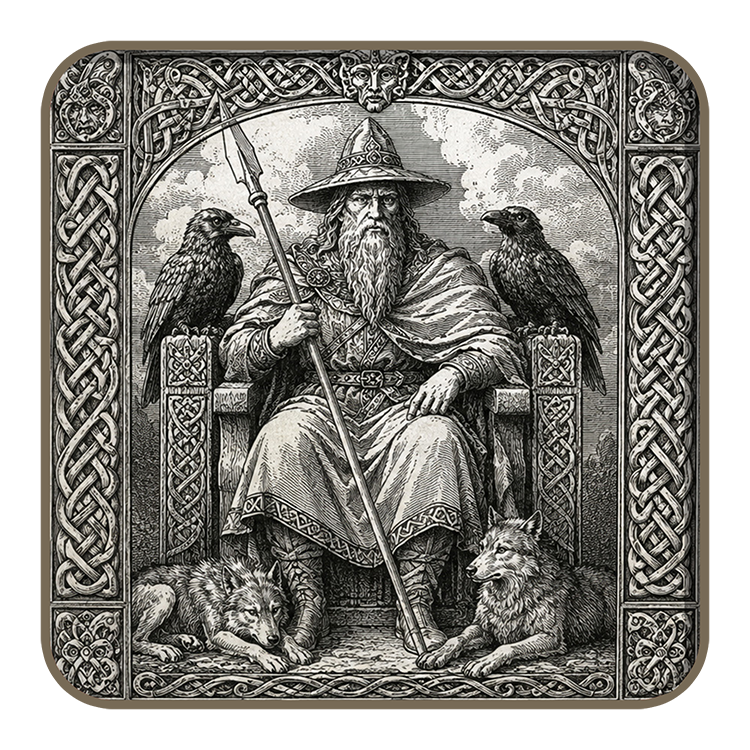
The wolf Fenrir will swallow him, and Odin’s son Vidar will avenge him. Odin’s animals express different parts of his power. Huginn and Muninn, whose names are connected with thought and memory, return with information. The wolves Geri and Freki sit beside him at feasts. His eight-legged horse Sleipnir can travel between worlds. Odin’s spear never misses in later descriptions, and his ring Draupnir produces matching rings every ninth night. These treasures add splendour, but knowledge remains his greatest pursuit. He is also associated with seidr, a form of magic involving prophecy and altering events. Freyja is said to have taught seidr to the Aesir. Loki mocks Odin for practising it because Norse society could judge some magical roles as unmanly.




Hi! I’m Jocelyn, and I created Mythfits Society to make discovering ancient myths easier, more interesting and much more fun.
Read My Story