
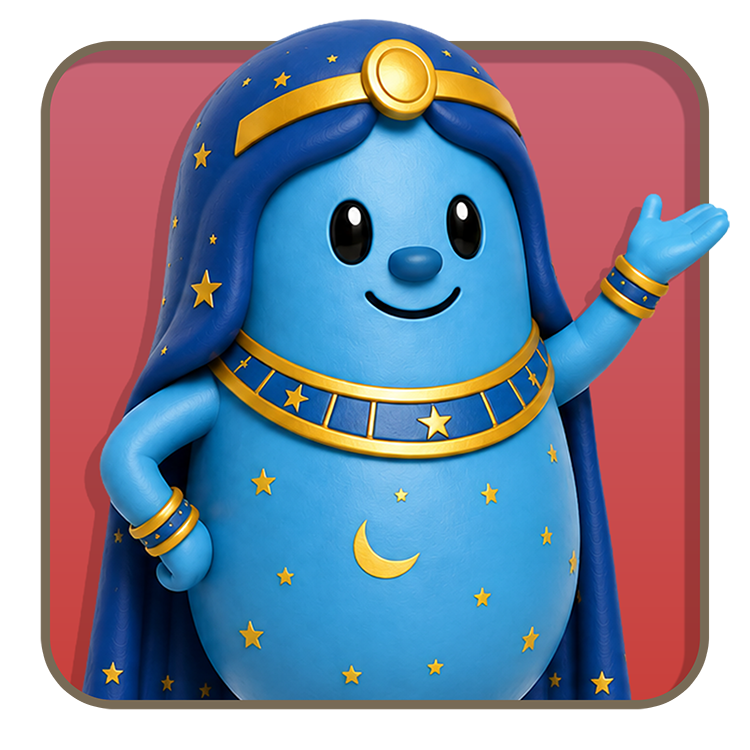
Nut belonged to the Heliopolitan family of gods. She was the daughter of Shu and Tefnut and the sister and partner of Geb. Their children were Osiris, Isis, Set and Nephthys, with some traditions adding Horus the Elder. A late story says Ra forbade Nut to give birth on any day of the year. Thoth won moonlight in a game and created five extra days, allowing each child to be born. These days completed the 365-day Egyptian calendar. Every evening the Sun entered Nut’s mouth in the west. It travelled through her body during the twelve hours of night and emerged in the east as a newborn Sun. Stars could follow a similar cycle. Some were imagined as Nut’s children, swallowed at dawn and reborn at night.
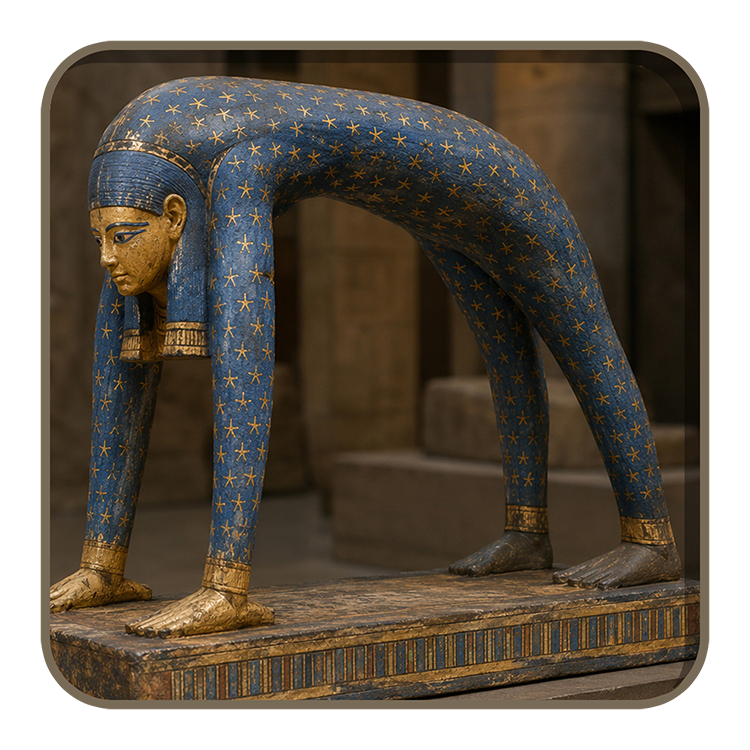
This did not make her a frightening devourer. The journey through her body renewed heavenly lights. Birth and swallowing were two parts of the same continuous process. Nut was extremely important in funerary art. Coffin interiors show her bending protectively over the dead, and inscriptions ask her to spread herself above them. The lid could become her sky-body while the coffin base represented earth. A dead person placed between them entered a miniature cosmos. Nut promised to receive the deceased as she received the setting Sun, then give them new life. Her image also appears on ceilings inside royal tombs, surrounded by boats, stars and the hours of night. The Book of Nut is a modern name for astronomical texts and pictures found in tombs and temples.
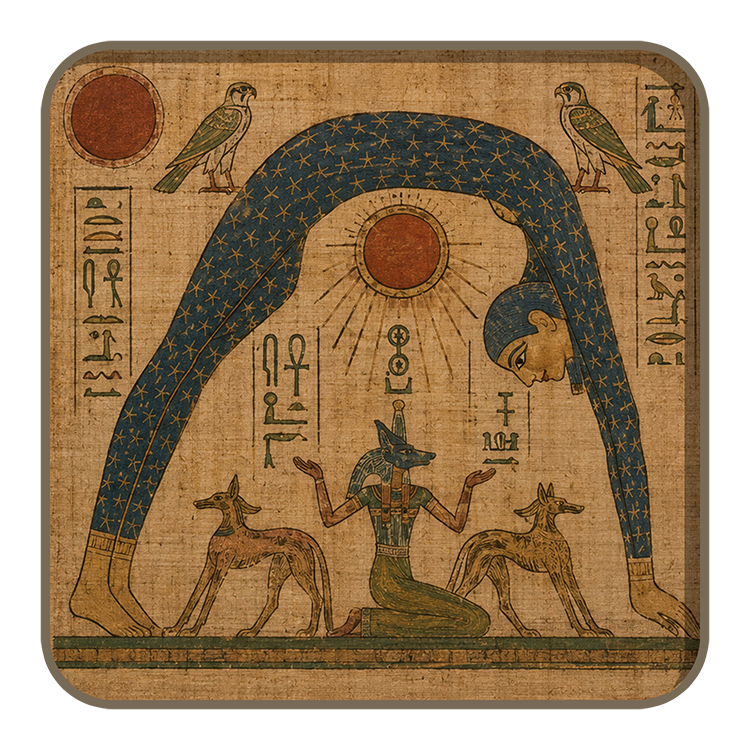
They describe the movements of the Sun and stars across her body. Egyptian observation of the sky helped organise calendars, farming and religious festivals. Their diagrams mix careful patterns with sacred explanation. For ancient scholars, astronomy and religion were not completely separate subjects. Measuring a star’s appearance also meant understanding its place in divine order. Nut was sometimes shown as a great cow whose belly carried stars. In another form she appears in a sycamore tree offering water and food to the dead. These pictures overlap with Hathor, another sky and tree goddess. Identifying Egyptian deities often depends on names and context, not only shape. Nut’s hieroglyph, a rounded water pot, may be balanced on her head when she stands as an ordinary woman.


Hi! I’m Jocelyn, and I created Mythfits Society to make discovering ancient myths easier, more interesting and much more fun.
Read My Story