
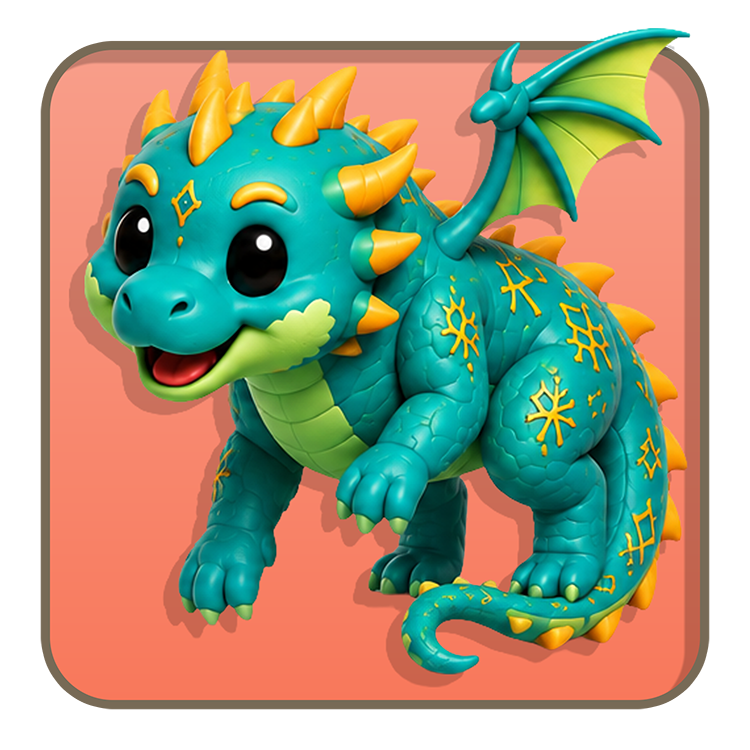
Nidhöggr is a fearsome dragon or serpent who gnaws at a root of Yggdrasil, the world tree. His name is often translated as “Malice Striker”, although the exact meaning is debated. He lives beneath the worlds, near the realm of the dead, and exchanges spiteful messages with the eagle above through Ratatoskr. Nidhöggr is not the villain of one long adventure. He is a constant danger under the structure of the cosmos, always biting at the roots that hold everything together. The poem Grímnismál describes three great roots stretching from Yggdrasil. Different beings live beneath them, while four stags browse among the branches and many serpents gather below. Nidhöggr gnaws from underneath. The tree is powerful, but it is never completely safe. The Norns care for Yggdrasil by pouring water and clay over it so that it does not wither.
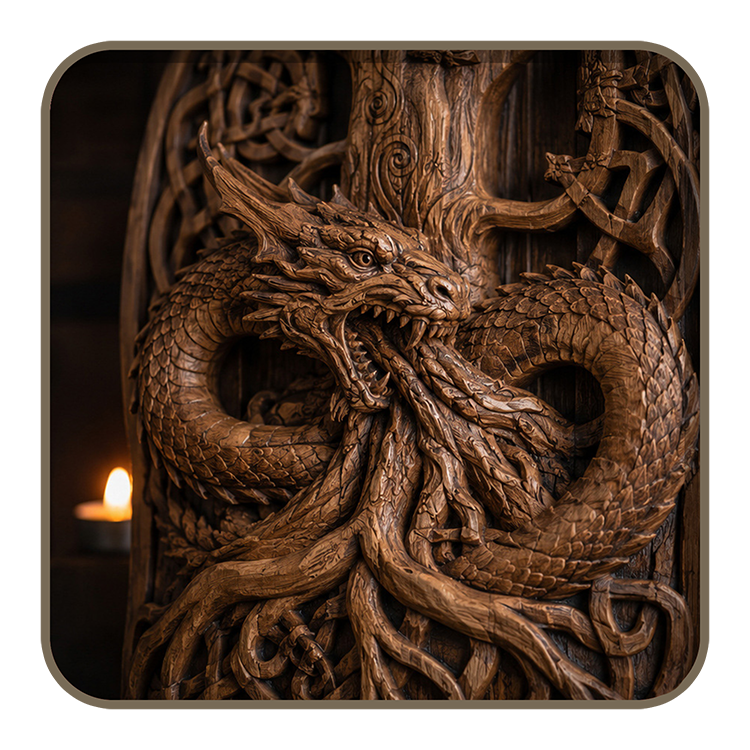
This creates a striking contrast. While wise beings work to preserve the tree, Nidhöggr steadily damages it. The cosmos survives through constant care rather than remaining perfect by itself. Ratatoskr runs between Nidhöggr and a great eagle in the upper branches. Snorri says the squirrel carries malicious words from one to the other. The myths never reveal who began the quarrel or quote the insults. Their hostility simply travels from the very top of the tree to the very bottom. In Völuspá, Nidhöggr appears near Náströnd, the Shore of Corpses. A dreadful hall is woven from snakes, and poison drips through openings in the roof. Oath-breakers, murderers and people who betray others wade through venom. Nidhöggr tears at the bodies of the dead, making this one of the darkest places in Norse poetry.
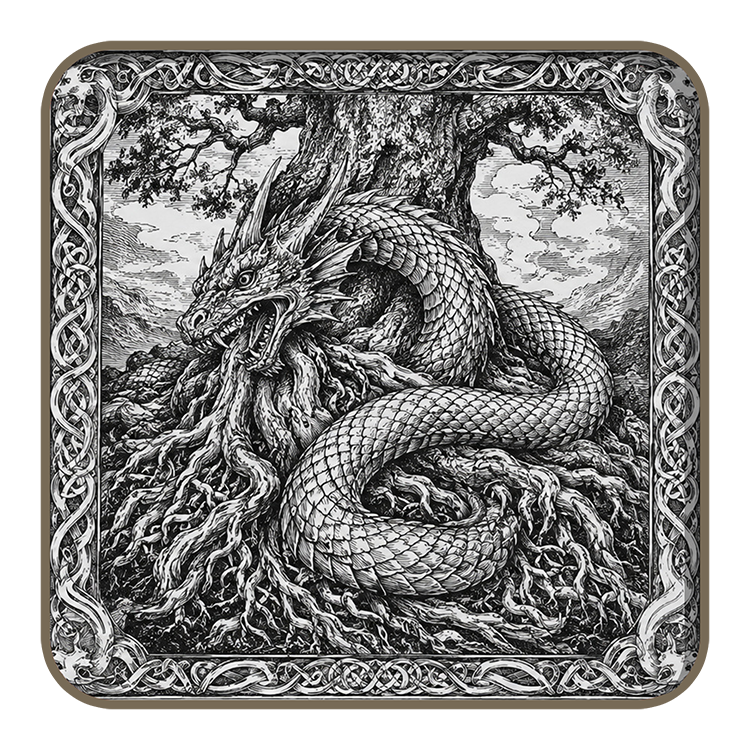
The poem’s ending is mysterious. After Ragnarok, the seeress describes a renewed green earth and returning gods. Then Nidhöggr flies over the plain carrying corpses in his feathers or wings. Some readers see one final shadow before the poem ends. Others think his arrival suggests that danger will exist even in the new world. Is he a dragon or a snake? Old Norse words for dragons and serpents overlap more than modern categories do. Nidhöggr flies in one scene and gnaws underground in another. Medieval poets did not need to supply a single wildlife-style diagram, so artists can reasonably imagine him in several ways.




Hi! I’m Jocelyn, and I created Mythfits Society to make discovering ancient myths easier, more interesting and much more fun.
Read My Story