


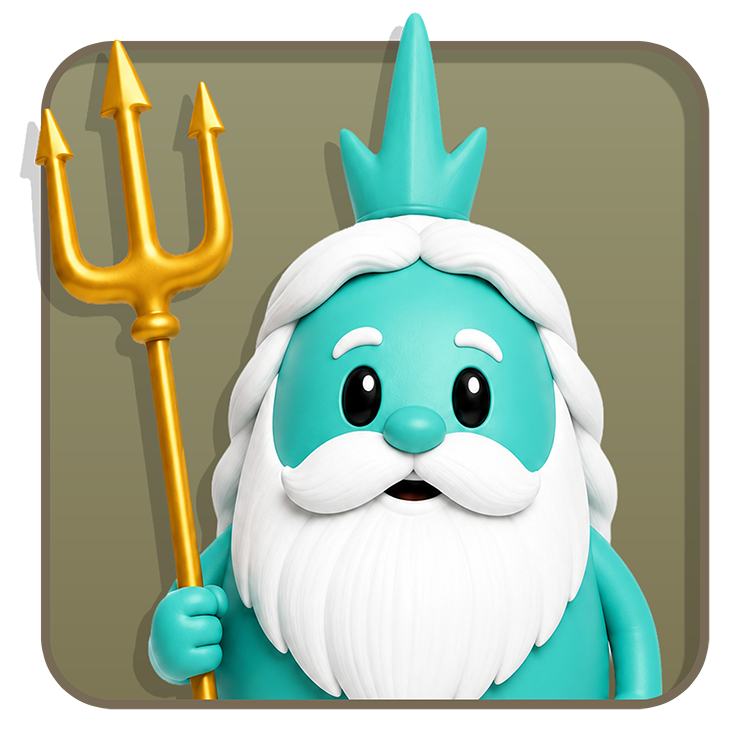
Neptune was the Roman god of water and became especially associated with the sea. Romans identified him with the Greek Poseidon, which brought Poseidon’s trident, storms, horses and many famous myths into Neptune’s story. In the Greek-influenced family tree, Neptune was a son of Saturn and Ops and brother of Jupiter and Pluto. After the older gods were defeated, Jupiter received the sky, Neptune the sea and Pluto the underworld.
Neptune’s main Roman festival was the Neptunalia on 23 July, during the hottest and driest part of the Italian summer. People built temporary shelters from leafy branches and gathered beneath them. The timing suggests why Neptune mattered even to people who never sailed anywhere. Fresh water was essential for crops, animals and human survival. Rome’s earlier Neptune therefore seems to have had an important connection with water generally before Greek Poseidon’s huge collection of sea myths became attached to him.
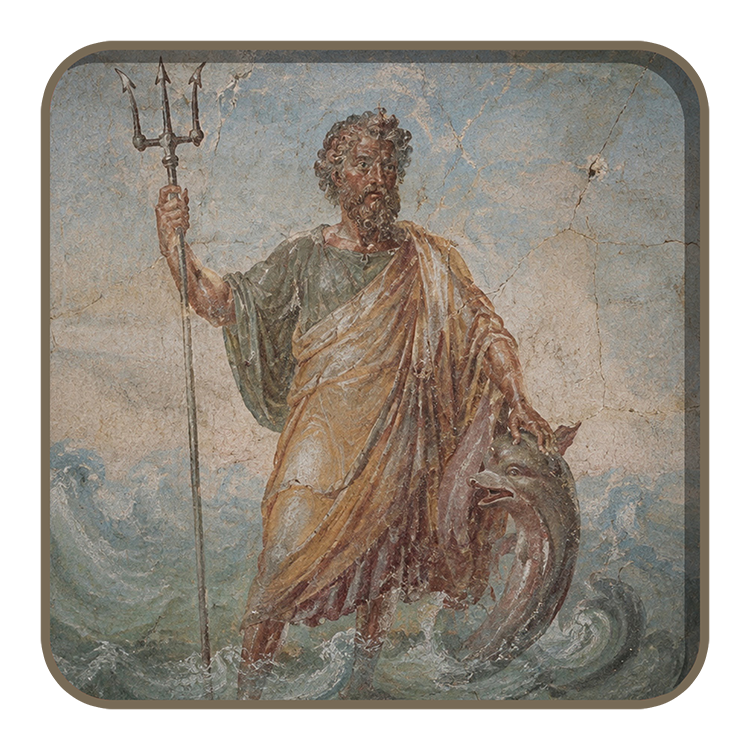
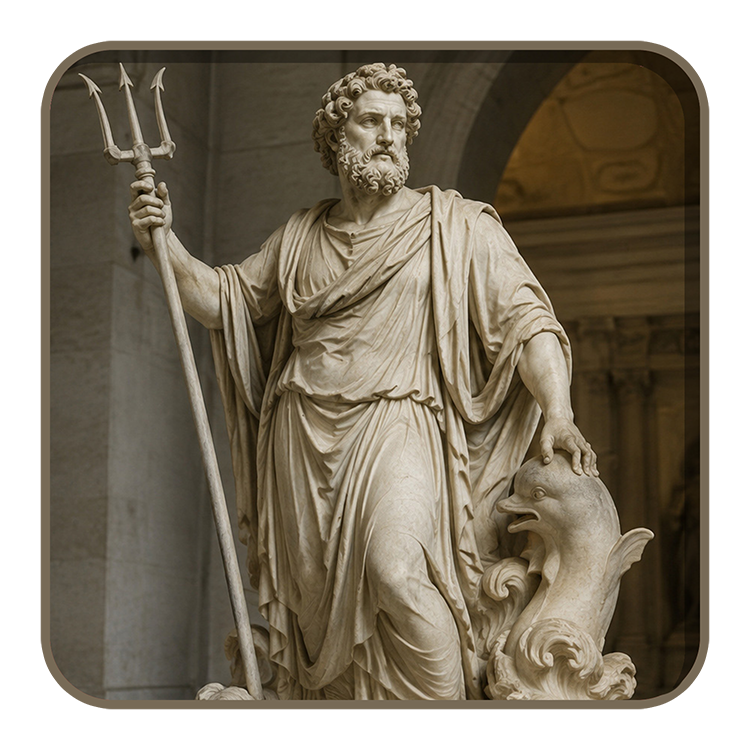
Later Roman stories and art show Neptune as the familiar bearded sea ruler carrying a trident. He could create storms, calm waves and shake the earth. He was also connected with horses and horse racing. Mosaics often show him travelling in a chariot pulled by hippocamps, fantastic horses with fish-like tails. Roman readers also knew the Greek story of Neptune’s contest with Minerva for Athens, although it originally belonged to Poseidon and Athena. Neptune’s image later appeared on coins and monuments, especially when Roman leaders wanted to celebrate naval power. The planet Neptune was named after him in the nineteenth century. For me, the useful thing to remember is the July festival as well as the trident. It shows that Neptune represented something much more basic than dramatic sea adventures: water itself, a resource Romans could never afford to take for granted.




Hi! I’m Jocelyn, and I created Mythfits Society to make discovering ancient myths easier, more interesting and much more fun.
Read My Story