

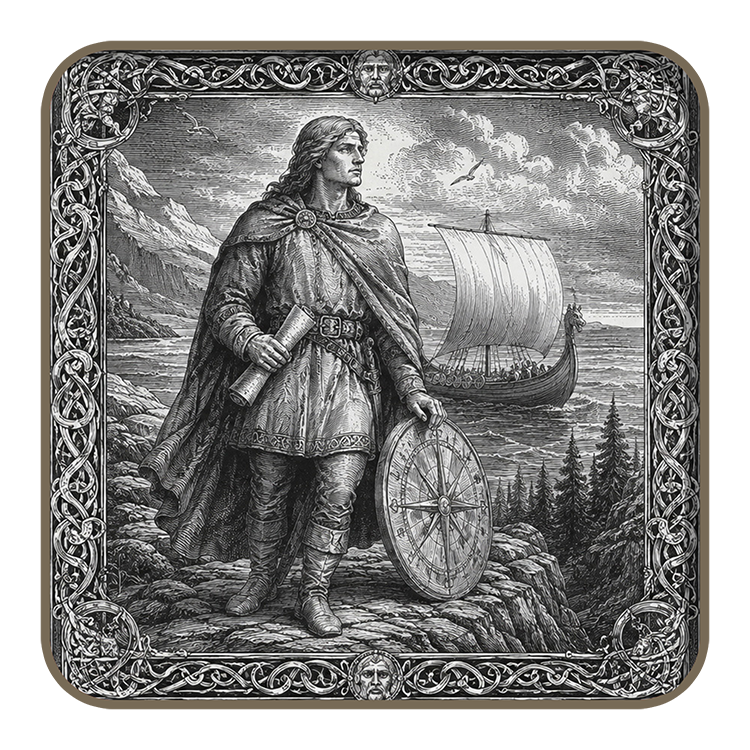
Leif was a son of Erik the Red, the explorer associated with the Norse settlement of Greenland. His mother is named Thjodhild in the Saga of Erik the Red. Leif probably grew up in a family used to sailing between Iceland and Greenland, where successful voyages depended on reading winds, currents, stars, seabirds and the shape of distant coastlines. Our main stories come from the Saga of the Greenlanders and the Saga of Erik the Red, written down long after the events. They disagree about exactly how Leif found the lands west of Greenland. In the Saga of the Greenlanders, a merchant called Bjarni Herjolfsson is blown off course and sights unknown coasts without landing. Leif later buys Bjarni’s ship and deliberately sets out to explore them.
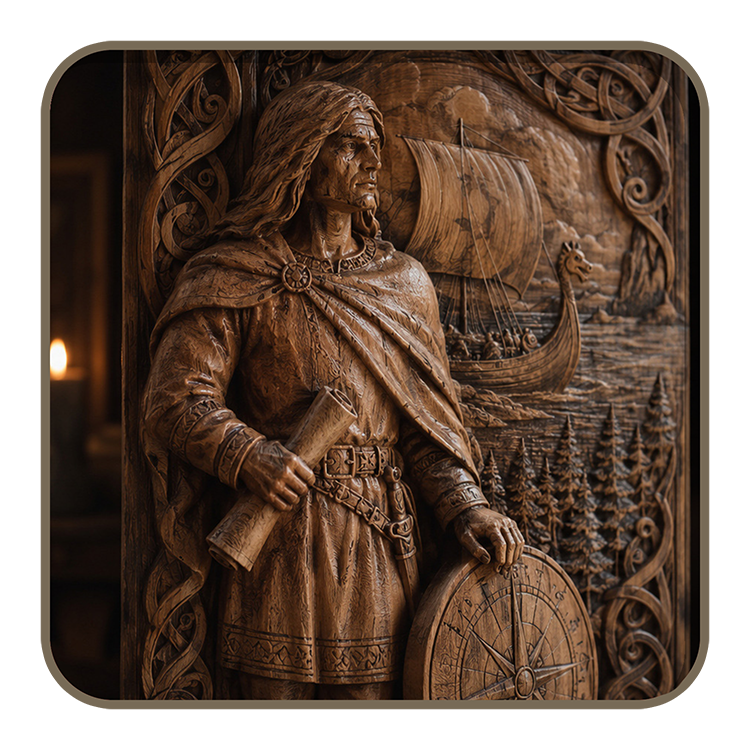
Leif’s crew first reaches a rocky land called Helluland, probably Baffin Island. Farther south they find wooded Markland, usually linked with Labrador. Finally they arrive in Vinland, where they build houses and spend the winter. The name may refer to grapes or wine, although scholars also discuss other explanations. The saga describes timber, fish and useful natural resources that Greenland lacked. In the Saga of Erik the Red, Leif discovers Vinland after being blown off course while returning from Norway. This version also says King Olaf Tryggvason asked him to bring Christianity to Greenland. Leif’s mother builds a church, while Erik the Red is less enthusiastic. Because the sagas tell different versions, it is safest to explain both instead of pretending one has been proven.
Leif earns the nickname “the Lucky”. On his return journey, he rescues shipwrecked people and gains valuable cargo. His luck does not mean the voyage was effortless. North Atlantic sailing demanded skill, teamwork and courage. Open boats could be wet and uncomfortable, while fog, ice and storms could hide the route home. Other Norse expeditions followed. The sagas describe Leif’s brother Thorvald, his sister or half-sister Freydis, and the trader Thorfinn Karlsefni travelling west. Encounters with Indigenous peoples sometimes led to trade and sometimes to fighting. The sagas use the Old Norse word Skrælingjar for the people they met. Modern retellings should remember that North America was already home to many Indigenous communities with their own histories.


Hi! I’m Jocelyn, and I created Mythfits Society to make discovering ancient myths easier, more interesting and much more fun.
Read My Story