

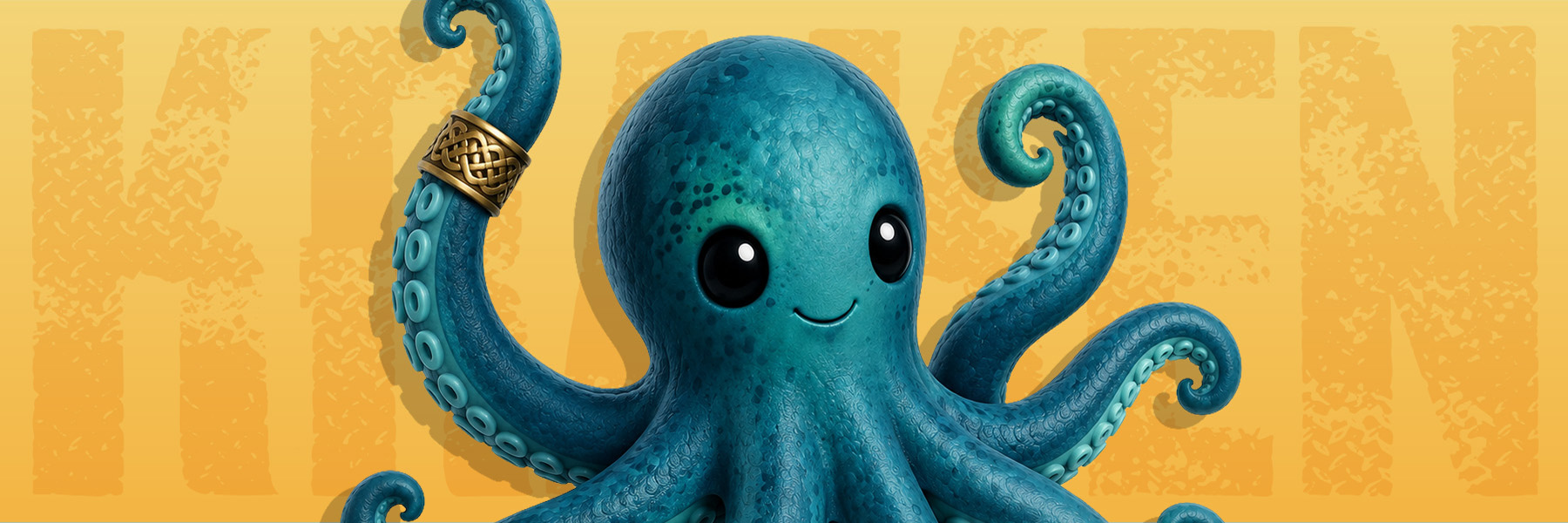

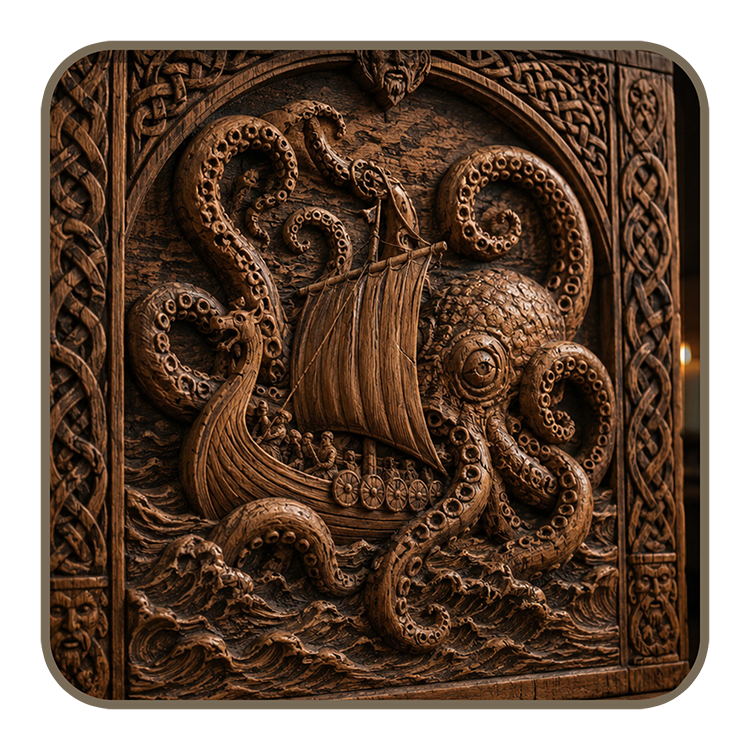
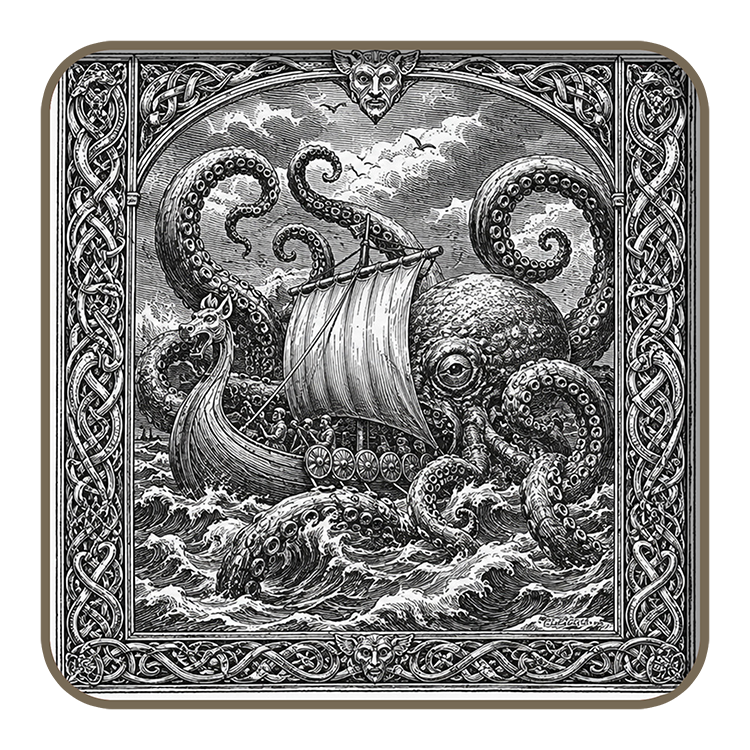
The Kraken is a gigantic sea creature from later Scandinavian folklore. Today it is usually pictured as a huge octopus or squid wrapping tentacles around a ship. Older descriptions are less definite. Some make it resemble an island, a mass of seaweed or an enormous many-armed animal. The Kraken does not appear in the Poetic Edda or the main Viking Age myths, so it does not belong in Odin’s family tree. It comes from seafaring tales recorded many centuries later. An important account was written by Erik Pontoppidan, an eighteenth-century bishop and natural historian. He collected reports of a creature so vast that its back could be mistaken for several little islands. Fish gathered above it, which made the area attractive to fishermen, but boats had to escape when the monster sank and caused a dangerous whirlpool.
Pontoppidan treated the Kraken as a real animal, although his evidence mixed observation, hearsay and older marvel stories. People then knew that the deep ocean contained animals rarely seen alive. Without underwater cameras, an unusual carcass or a glimpse of tentacles could become an enormous story. The name is related to Scandinavian words used for twisted or unhealthy animals. Over time, writers made the Kraken increasingly squid-like. Alfred Tennyson imagined it sleeping in ancient depths, while nineteenth-century adventure stories helped make giant cephalopods famous around the world. Real giant squid can reach impressive lengths. They have enormous eyes, toothed suckers and two long feeding tentacles. Damaged bodies sometimes washed ashore before scientists understood the living animals. Giant squid probably encouraged some monster stories, but no known squid is large enough to resemble an island or drag a great ship underwater.
The Kraken also expresses real fears. Sudden currents, reefs, storms, whales and floating wreckage could overturn small vessels. A patch of calm water might become deadly within minutes. Turning those dangers into one hidden animal gave sailors a dramatic way to describe an unpredictable sea. It is tempting to call every huge sea monster a Kraken, but Greek Scylla, the biblical Leviathan and Norse Jörmungandr have different origins. The Kraken is also related in later retellings to the medieval hafgufa, although the two traditions should not automatically be treated as identical.



Hi! I’m Jocelyn, and I created Mythfits Society to make discovering ancient myths easier, more interesting and much more fun.
Read My Story