


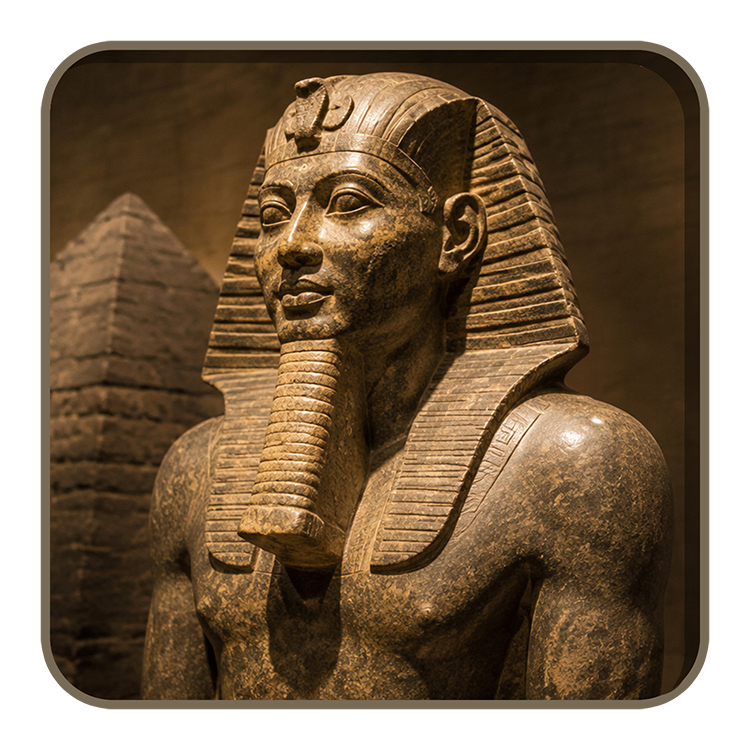
Khufu was probably the son of Pharaoh Sneferu, who built several pyramids while Egyptian architects improved their methods. His mother was likely Queen Hetepheres I. Khufu's full Egyptian name was Khnum-khufu, meaning that the god Khnum protected him. Later Greek writers called him Cheops. Lists of kings and inscriptions confirm his reign, but the exact number of years is debated. Members of his large royal family were buried in smaller pyramids and mastaba tombs beside his complex. The Great Pyramid originally stood about 146 metres high. Its core contains millions of stone blocks, while smooth white limestone once covered the outside. Inside are passages, chambers and relieving spaces above the room commonly called the King's Chamber. The whole site included temples, causeways, cemeteries and pits containing dismantled wooden boats.
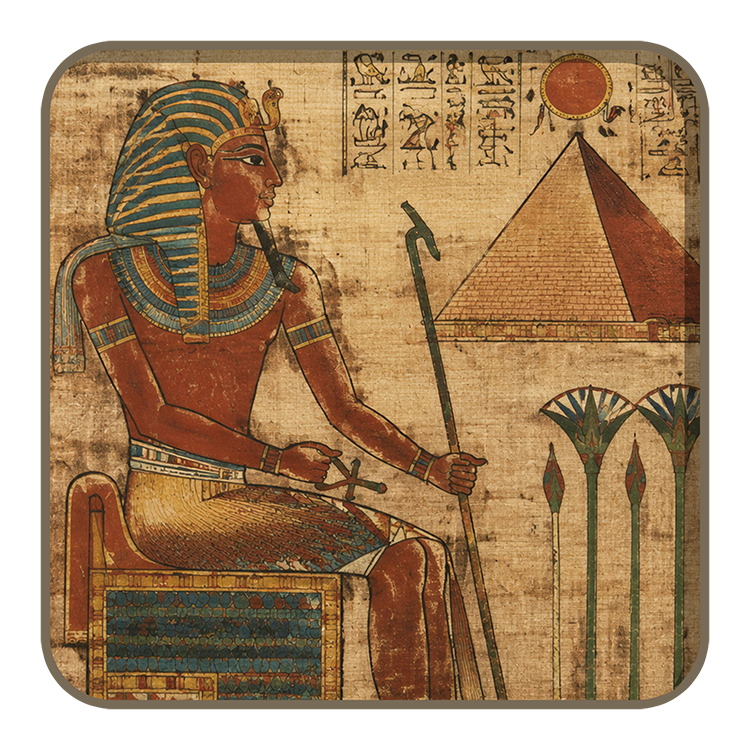
The pyramid was not an isolated triangle in the desert. It belonged to an organised sacred landscape where rituals and offerings continued after the king's death. Building it demanded extraordinary planning. Officials organised quarrying, transport, food, tools and teams of workers. Archaeological remains near Giza include workers' housing, bakeries, animal bones and graves. This evidence does not support the popular idea that the pyramid was built mainly by huge gangs of enslaved people. Labour probably included skilled permanent workers and rotating crews supported by the state. Marks inside the pyramid preserve team names, including one praising Khufu, giving us a rare glimpse of the people behind the monument. A papyrus journal discovered at Wadi al-Jarf belonged to an official named Merer. It describes his crew transporting fine limestone by boat from Tura towards Khufu's pyramid project.
This is one of the most exciting written records from the Old Kingdom because it explains a real part of the supply system. It does not solve every mystery about construction, but it replaces wild guesses with evidence about waterways, workers and careful administration. Ramps and levers were probably important, although scholars still debate their exact arrangement. Later stories were not always kind to Khufu. The Greek writer Herodotus, writing more than two thousand years afterwards, described him as a cruel ruler who closed temples and oppressed the country. Egyptian tales also presented him as a king interested in magic.




Hi! I’m Jocelyn, and I created Mythfits Society to make discovering ancient myths easier, more interesting and much more fun.
Read My Story