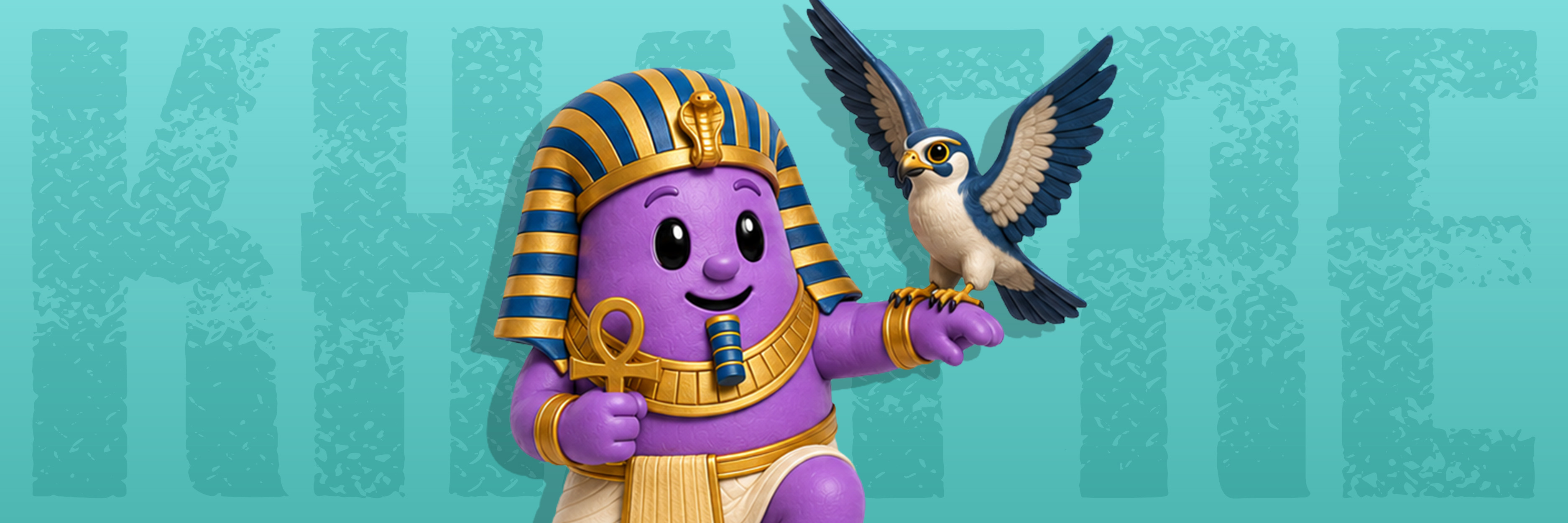

The exact order and length of Fourth Dynasty reigns are not completely certain. Khafre probably followed his brother Djedefre, who built his pyramid at Abu Rawash rather than Giza. Greek writers later called Khafre Chephren. As with Khufu, surviving evidence tells us much more about royal building than about his personality. He had several queens and children, and family members received tombs near his pyramid. Titles and inscriptions help Egyptologists reconstruct these relationships, but some details remain debated. Khafre's pyramid originally rose to about 143 metres. Its burial chamber was cut partly into the bedrock and held a granite sarcophagus. A causeway connected a temple beside the pyramid with a valley temple closer to the floodplain. The valley temple used enormous limestone and granite blocks, carefully fitted together.
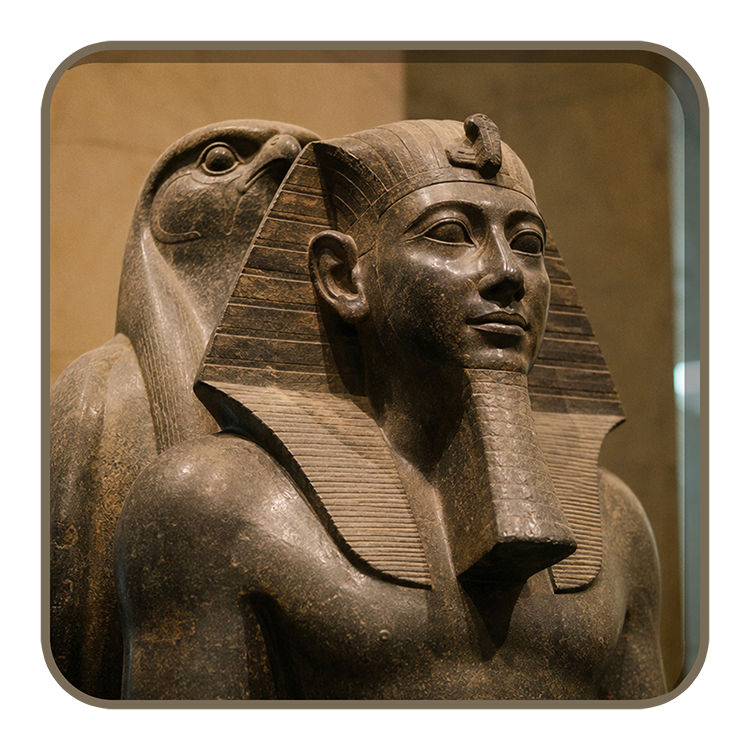
Ceremonies there prepared and renewed the king's body and spirit. A smaller pyramid, boat pits and surrounding tombs completed the complex. Visitors today see ruins, but the original site would have been polished, colourful and busy with priests. Several magnificent statues of Khafre were found in the valley temple. The best known is carved from dark anorthosite gneiss, a very hard stone transported from far south in Egypt. It shows the king seated on a throne, calm and youthful. Behind his head, the falcon god Horus spreads protective wings. The throne sides carry symbols showing Upper and Lower Egypt joined together. This was not meant as an everyday portrait. Every detail presents ideal kingship, divine protection and control of the united country. The Great Sphinx stands beside Khafre's causeway and valley temple, so most Egyptologists connect it with his building programme.
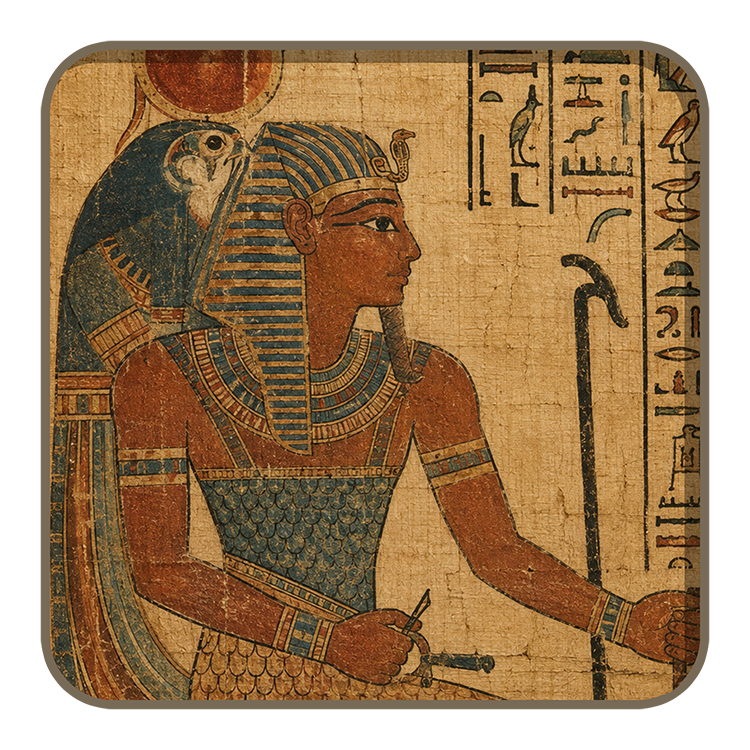
It has a lion's body and a royal human head, combining physical strength with the intelligence and authority of the pharaoh. However, no surviving inscription from Khafre's reign states directly that he ordered it, so the attribution rests on archaeological context and artistic comparison. Later Egyptians worshipped the Sphinx as a form of the Sun god and called it Hor-em-akhet, 'Horus in the Horizon'. Khafre's pyramid was robbed in ancient times. When the Italian explorer Giovanni Belzoni entered its upper passage in 1818, he found the burial chamber empty except for the sarcophagus and some remains that later proved to be from a bull.





Hi! I’m Jocelyn, and I created Mythfits Society to make discovering ancient myths easier, more interesting and much more fun.
Read My Story