
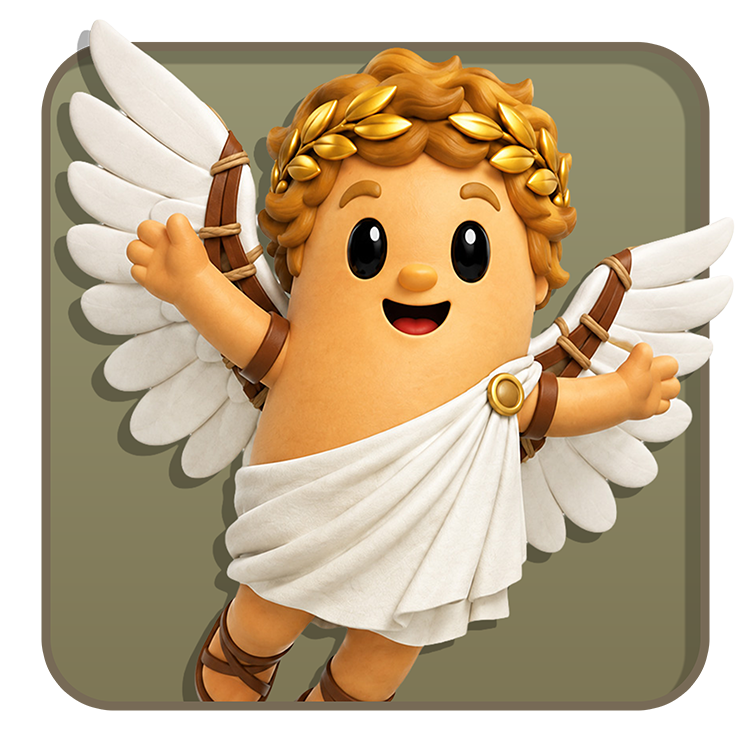
Icarus was the son of Daedalus, the brilliant inventor who designed the Labyrinth for King Minos of Crete. After Daedalus helped Theseus and Ariadne, the king would not let him leave the island. Escape by ship was too dangerous, so Daedalus looked upwards instead. He collected feathers and built two pairs of wings, fastening them with thread and wax. Before they took off, he taught Icarus how to use them and gave him an important warning: do not fly too low beside the sea or too high towards the blazing sun.
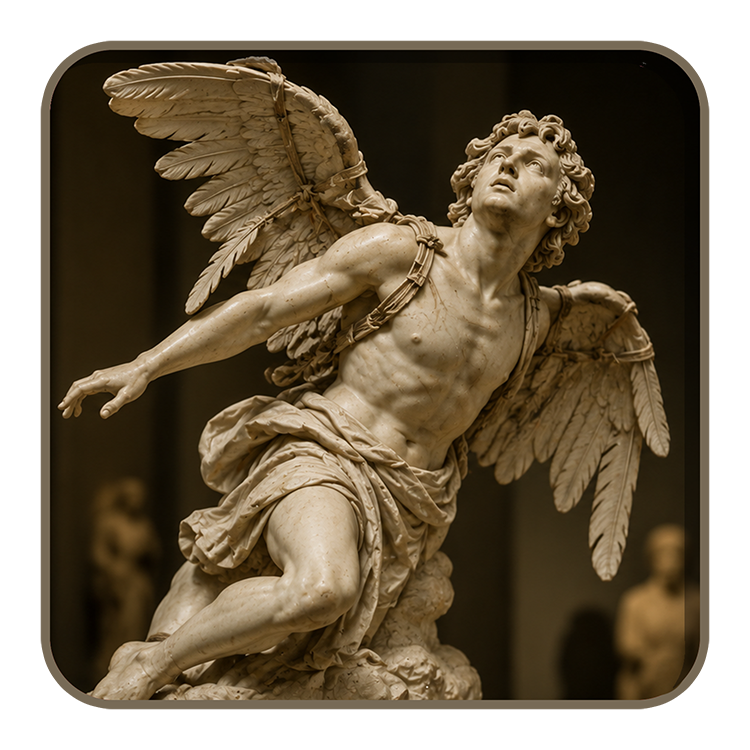
At first, the plan worked. Father and son rose into the air, leaving Crete behind while people below stared up in amazement. Icarus soon became thrilled by the feeling of flight. He climbed higher and higher, forgetting or ignoring his father’s warning. The heat softened the wax holding his feathers together. One by one, the feathers came loose. Icarus flapped his bare arms, but they could no longer carry him, and he fell into the sea. Daedalus searched for him and later named the nearby island Icaria in his memory.
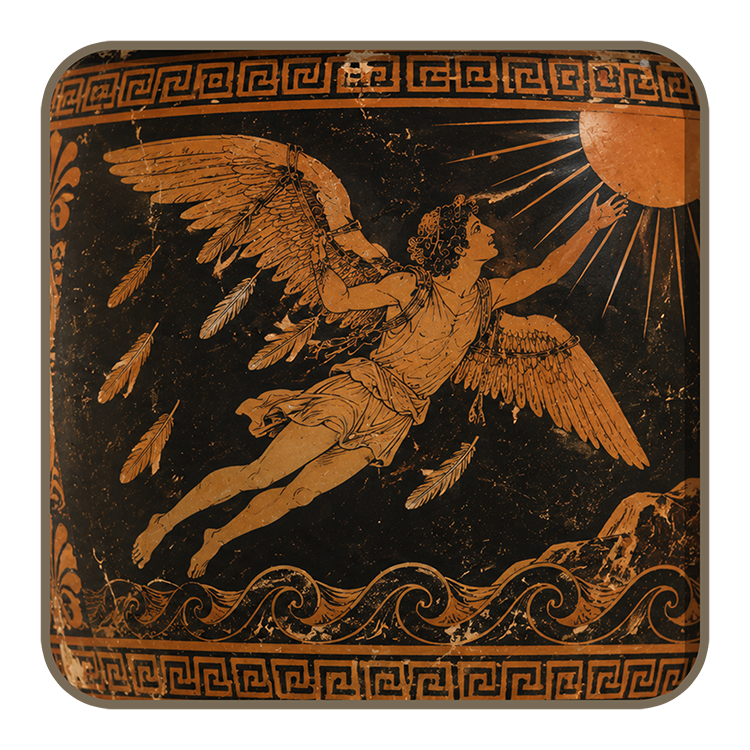
The story is often explained as a warning about pride, recklessness and refusing sensible advice. However, I also think it captures why Icarus is remembered so strongly: flying must have felt completely impossible and completely wonderful. He is not a great warrior like Heracles or Perseus, and he does not defeat a monster. He is a young person who experiences sudden freedom and makes one disastrous choice. Artists have painted his fall for centuries, while the phrase “flying too close to the sun” still describes someone whose ambition carries them beyond safe limits.
⬅ Back




Hi! I’m Jocelyn, and I created Mythfits Society to make discovering ancient myths easier, more interesting and much more fun.
Read My Story