
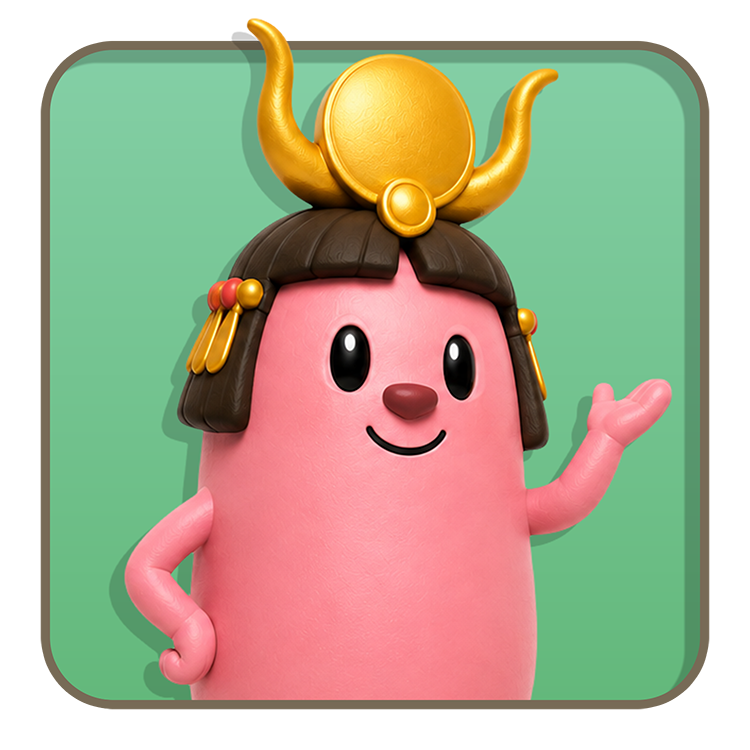
Cattle provided milk, strength and wealth, so the cow was a powerful image of nourishment rather than an insult. A heavenly cow could carry the Sun across her body. Hathor was called the mother, wife or daughter of different solar gods depending on place and period. As the Eye of Ra, she acted as the Sun god’s active power. Egyptian family relationships between gods were flexible, and one goddess could fill several roles without those traditions cancelling one another. In the story of humanity’s rebellion, Ra sends his Eye as Hathor or Sekhmet to punish people. The goddess becomes so violent that Ra fears nobody will survive. He orders beer to be coloured red and poured across the land. She drinks it, becomes peaceful and forgets her attack.
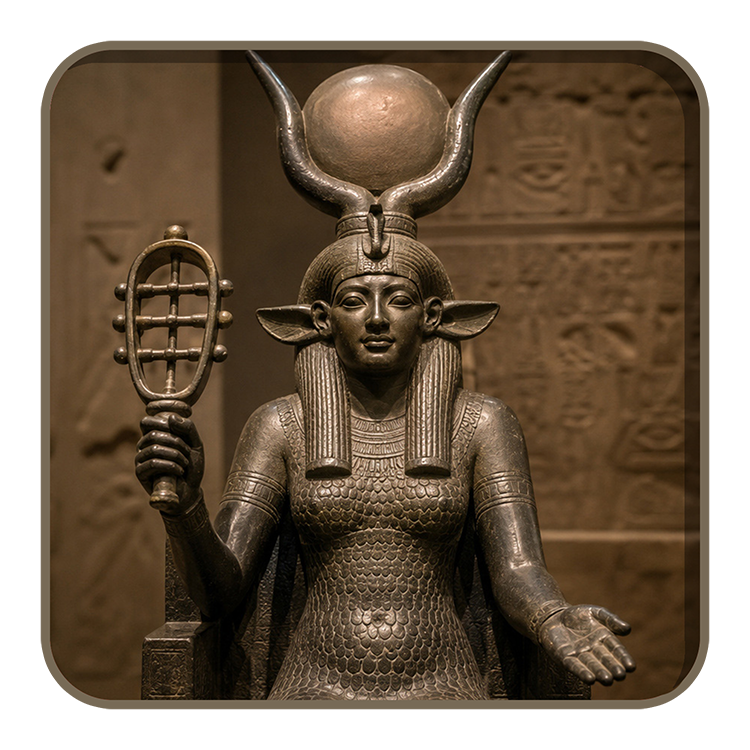
Festivals later used music and drink to celebrate Hathor’s joyful side. The myth links her with both dangerous solar heat and the happiness that returns when rage is calmed. Hathor’s greatest temple stood at Dendera. Its surviving buildings are mainly from the Ptolemaic and Roman periods, though worship there was much older. Temple walls show rituals, festivals and the sacred boat used to carry her image in procession. During a festival called the Beautiful Reunion, her statue travelled from Dendera to visit Horus at Edfu. Crowds celebrated the divine meeting with music, food and drink. Religion could be noisy and cheerful, not only silent and serious. The sistrum, a metal rattle, was one of Hathor’s special instruments. Shaking it created a bright jingling sound believed to please the goddess and drive away harmful forces.
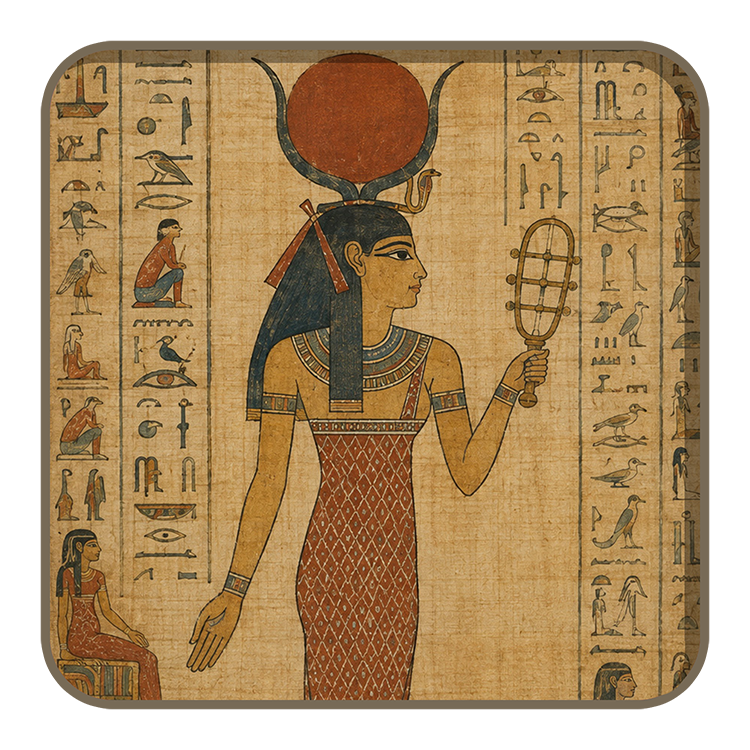
Musicians, dancers and women serving in temples could hold sistra. Hathor was also called Mistress of Turquoise and protected expeditions to mines in Sinai. Workers left inscriptions and offerings at her shrine near Serabit el-Khadim, asking for safety in a harsh landscape. In funerary belief, Hathor was Lady of the West. The west was where the Sun set and where many cemeteries lay. Tomb paintings show her as a cow emerging from the western mountain to welcome the dead. She could provide shade, water and food during the journey into the afterlife. Small mirrors and cosmetic objects also carried her face because beauty and renewal belonged to her power.




Hi! I’m Jocelyn, and I created Mythfits Society to make discovering ancient myths easier, more interesting and much more fun.
Read My Story