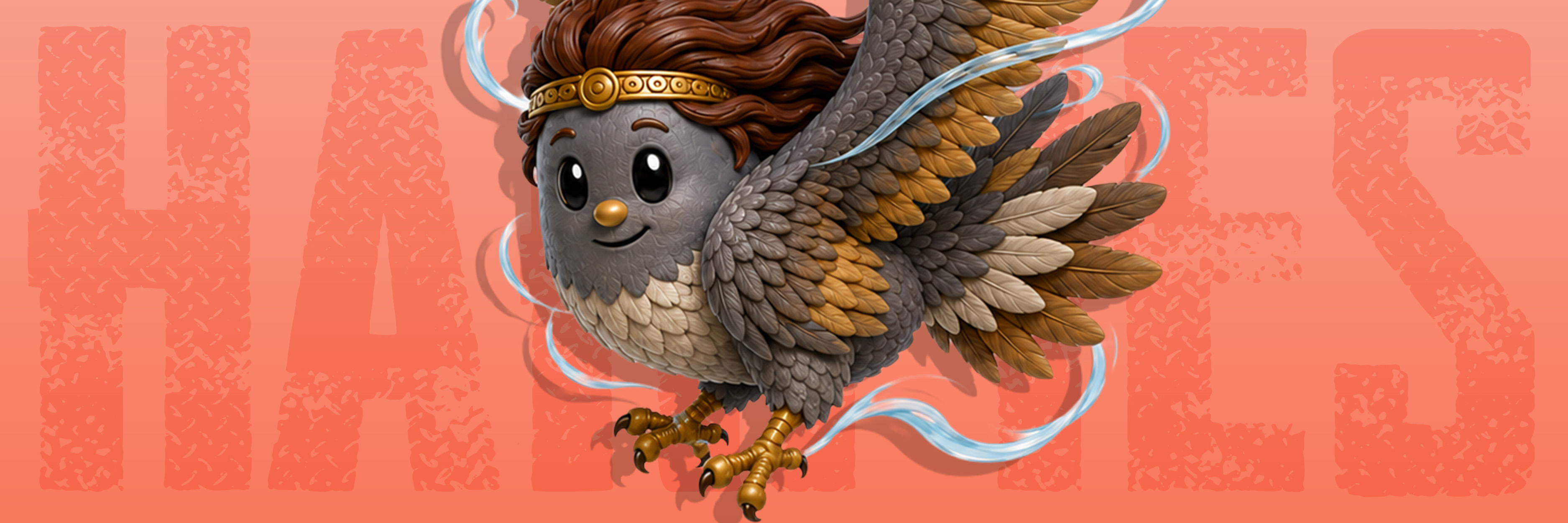

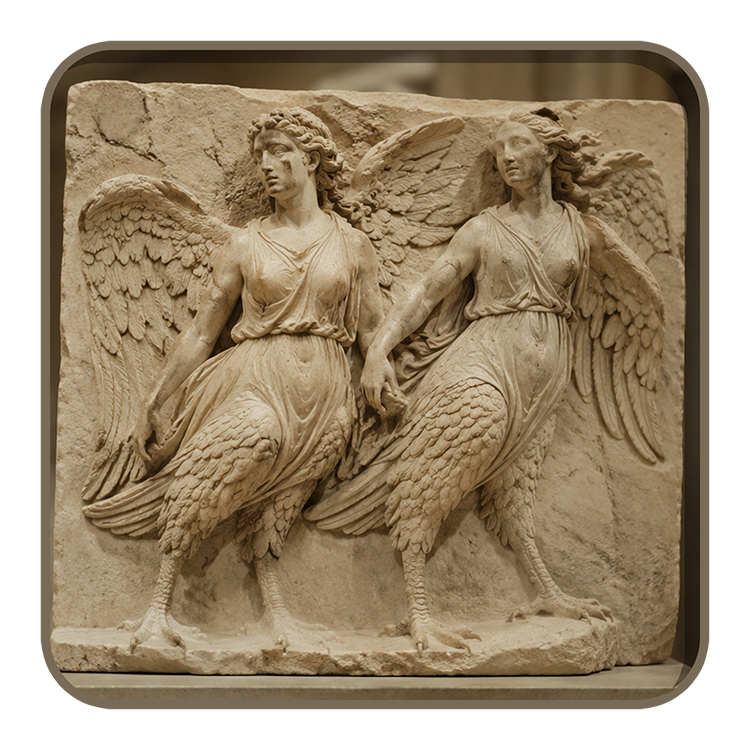
Harpies were winged female creatures whose name meant 'snatchers'. Early Greek stories imagined them as incredibly fast spirits of storm winds. Later artists often showed them with women's heads, birds' bodies and sharp claws. Different writers gave them different names and appearances, but Aello, Ocypete and Celaeno are among the best known. Their sister was sometimes Iris, the rainbow messenger. That makes their family rather strange: one sister brings a beautiful rainbow while the others swoop down and steal your lunch!
One famous adventure involves King Phineus. Whenever food was placed in front of him, Harpies flew down and snatched it away or ruined what remained. When Jason and the Argonauts arrived, Phineus promised to help them if they could stop the creatures. Two winged heroes, Zetes and Calais, chased the Harpies through the sky until they finally agreed to leave him alone. The story later became important to Roman readers because the Harpies' island appears again in Virgil's Aeneid.
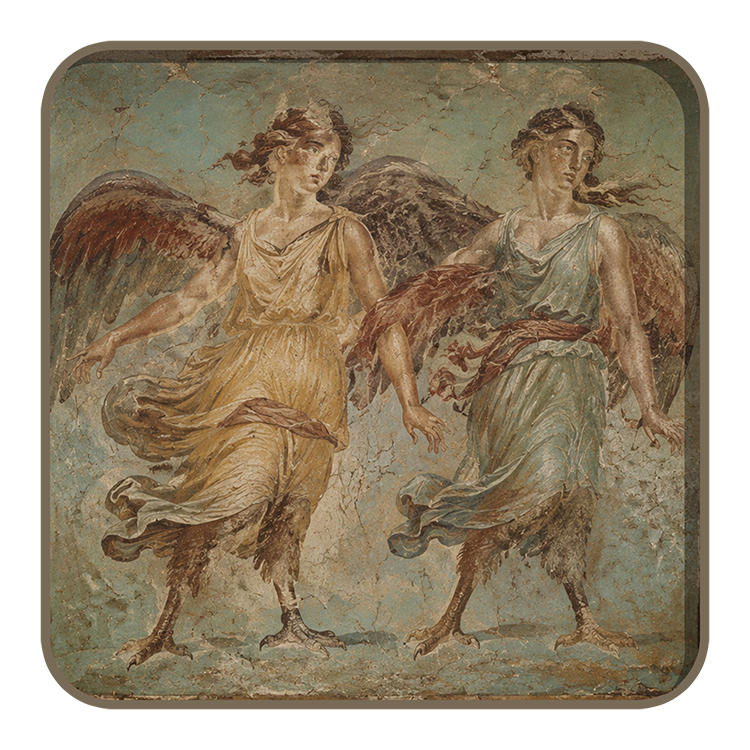
Aeneas and his Trojan followers land there during their journey to Italy. They find animals, prepare a feast and are suddenly attacked by Harpies who steal and spoil the food. The Trojans try fighting, but the creatures are almost impossible to hurt. Celaeno then gives Aeneas a frightening prophecy saying the Trojans will become so hungry that they eat their tables. Much later, they use flat bread as plates and eat the bread afterwards, realising the prophecy has come true without the terrible disaster they expected. Harpies also appear near the entrance to the underworld in the Aeneid. They were not simply flying monsters for heroes to defeat. They arrived like a sudden storm, wrecked whatever felt safe and pushed the story in a new direction. To remember them, picture a perfect picnic, a thunder of wings and every sandwich disappearing into the sky.




Hi! I’m Jocelyn, and I created Mythfits Society to make discovering ancient myths easier, more interesting and much more fun.
Read My Story