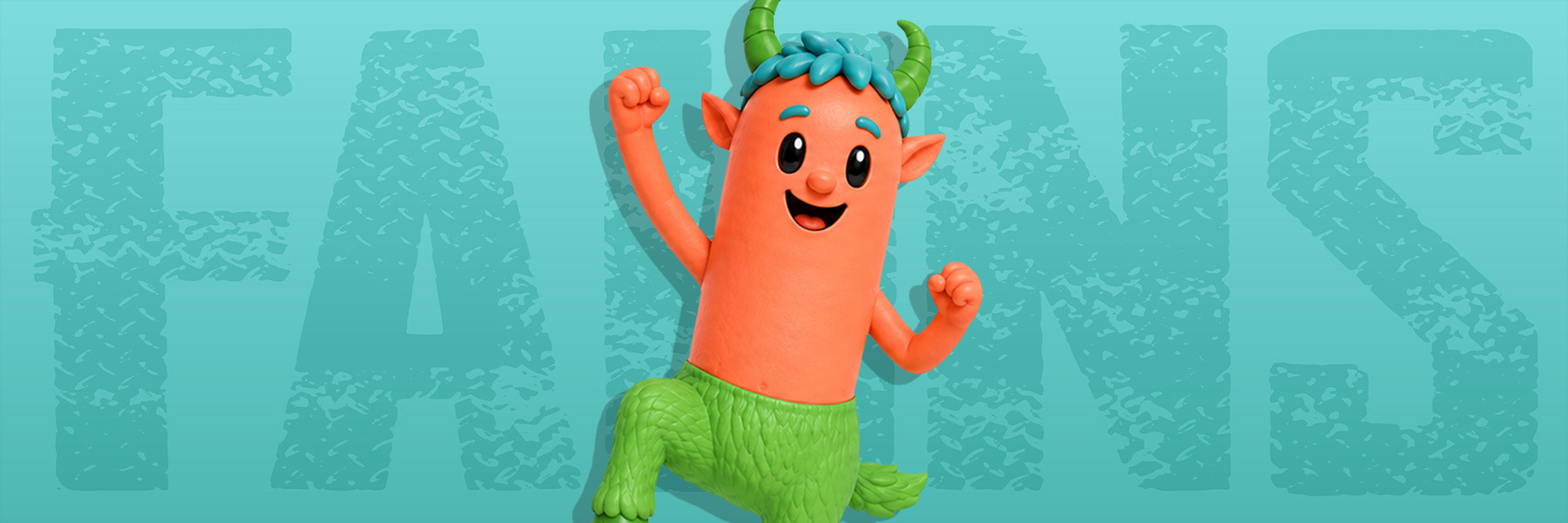

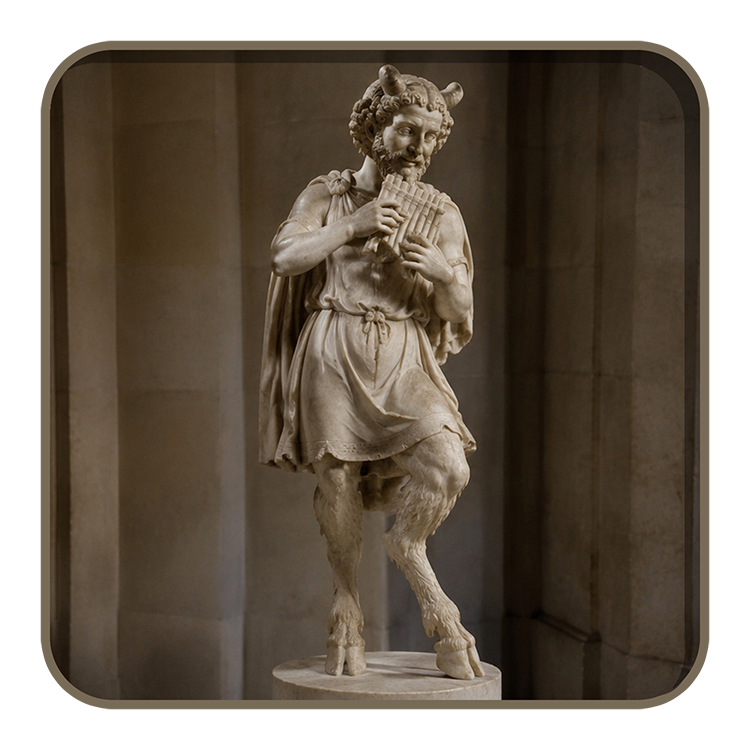
Fauns were Roman spirits associated with woods, fields, flocks, music and the unpredictable countryside. Artists often gave them pointed ears, small horns, shaggy legs and goats’ hooves. They became closely connected with the Greek satyrs who followed Bacchus, and eventually the two types of creature became very difficult to separate in Roman art. A faun might dance, play pipes, chase through the woods or surprise a traveller. They were very different from grand gods such as Jupiter. Fauns belonged to caves, paths and pastures where nature seemed lively and not completely under human control.
Their name was connected with Faunus, an old Italian god of wild country, livestock and prophecy. Faunus could send mysterious messages through dreams or strange voices in the forest. In Virgil’s Aeneid, King Latinus visits an oracle of Faunus and receives a warning about who his daughter Lavinia should marry. The answer comes at night from a sacred grove, which feels exactly right for a woodland god. Romans also connected Faunus with the ancient festival of Lupercalia, although historians still debate exactly how the festival and god were related.
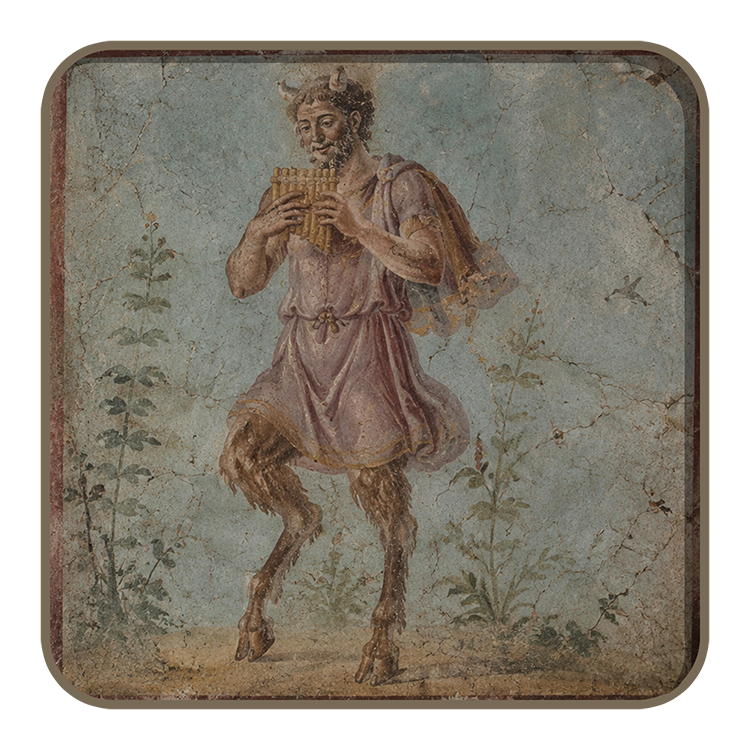
Roman artists filled mosaics, sculptures and wall paintings with fauns and satyrs. They might play pipes or cymbals, carry grapes or appear beside Bacchus. Some look young and almost completely human, while others are hairy, horned and much more goat-like. Their behaviour was not always friendly, and ancient stories sometimes show them ignoring other people’s boundaries, so they were not simply cute woodland helpers. They could also represent the nervous feeling that something unseen was moving nearby. Later books and art often made fauns gentler and more magical. Mr Tumnus from The Lion, the Witch and the Wardrobe is a famous modern example, but ancient Roman fauns could be much less polite! I would remember them as creatures of the edge of civilisation: where straight Roman roads ended, trees twisted across the path and every unexplained rustle might mean something was watching.


Hi! I’m Jocelyn, and I created Mythfits Society to make discovering ancient myths easier, more interesting and much more fun.
Read My Story