The Greeks called the Fates the Moirai, a name connected with the share or portion given to each person. They were usually shown as three goddesses: Clotho, Lachesis and Atropos. Their parentage changes between ancient sources. Hesiod first describes them as daughters of Nyx, the goddess of Night, but elsewhere calls them daughters of Zeus and Themis. That difference is a useful reminder that Greek mythology was never one perfectly fixed storybook. However they were born, the sisters represented destiny and the limits that even powerful people could not simply ignore.
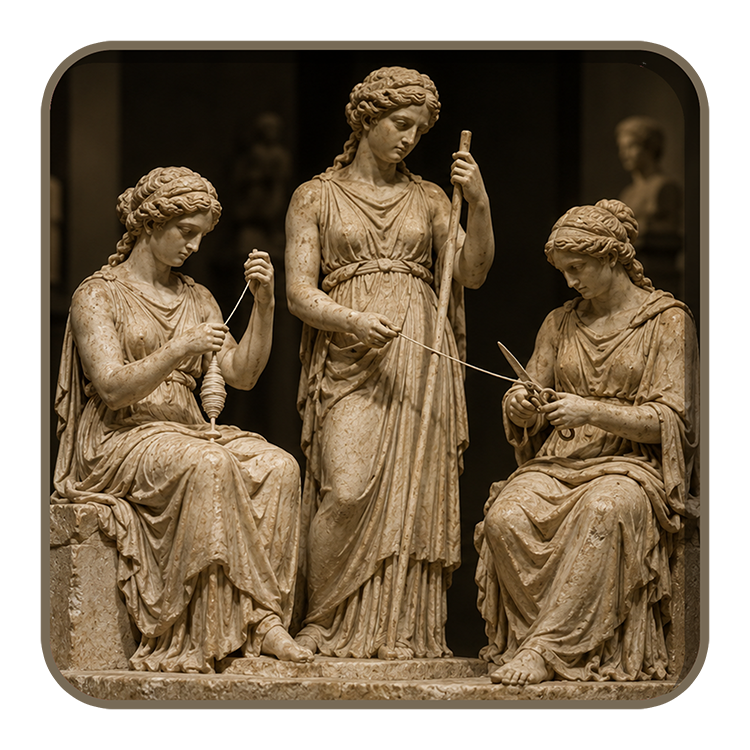
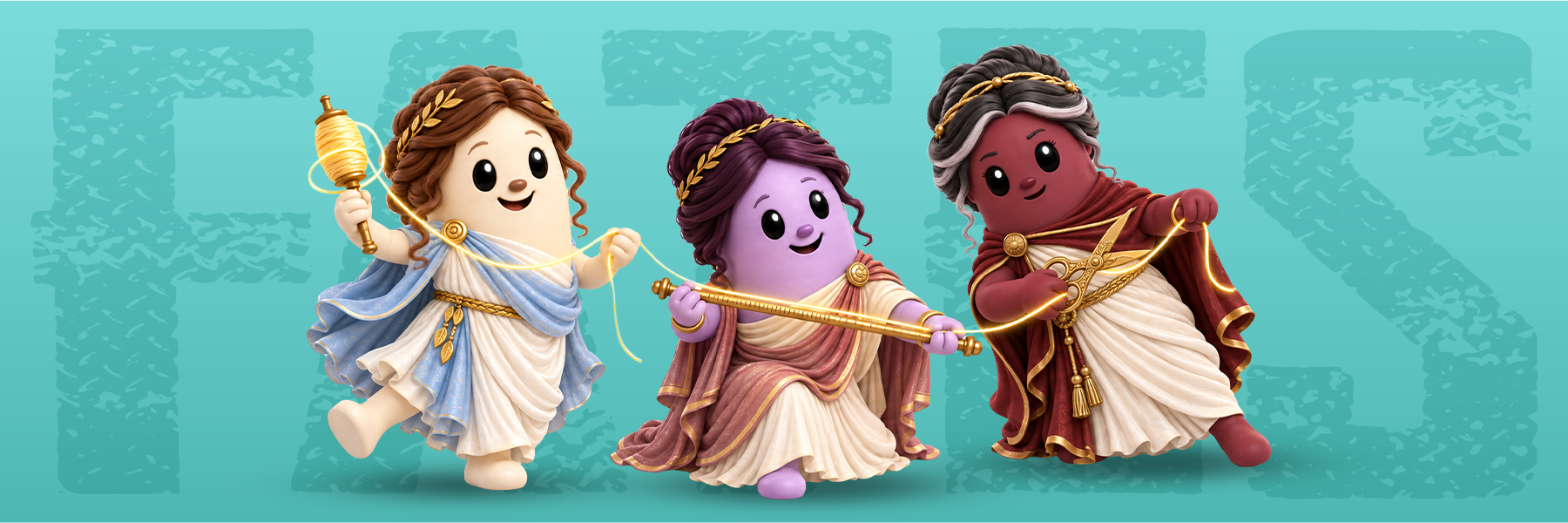
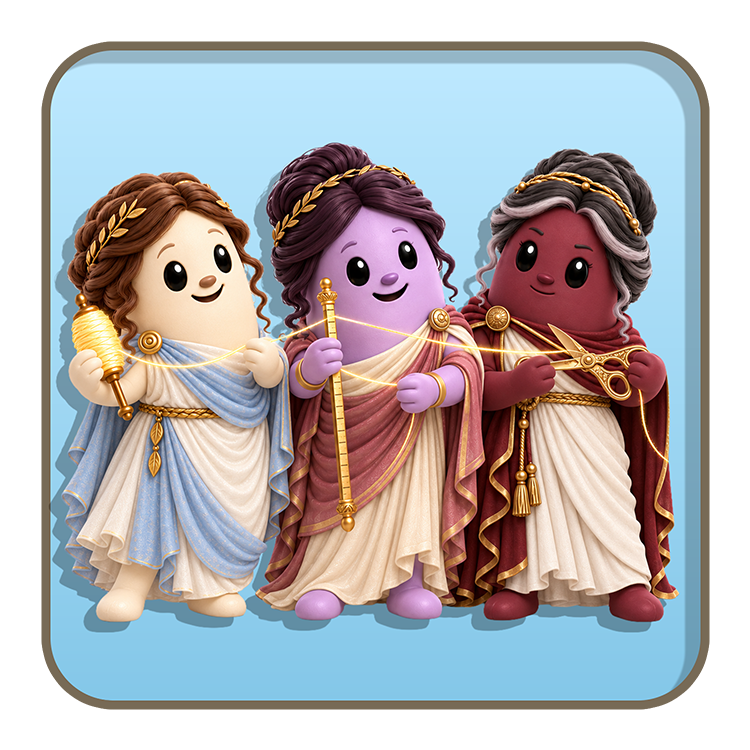
A person’s life was imagined as a thread. Clotho, whose name means “Spinner”, began it with her spindle. Lachesis, the “Apportioner”, measured the length and assigned each person their share. Atropos was the “Unturnable” or “Inevitable” one. She cut the thread when that life reached its end. Artists therefore gave the sisters spindles, measuring rods, scrolls and shears. They were not monsters hunting people, and they were not villains. They represented the frightening idea that every life follows a course and that nobody can keep changing fate forever.
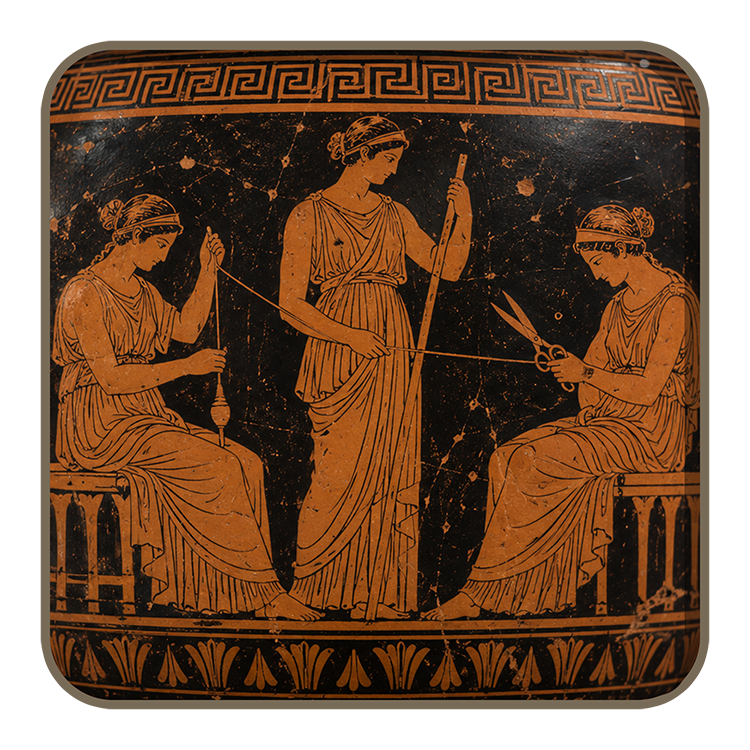
The Fates appear around major moments such as births, marriages and deaths. In some stories, even Zeus respects what has been allotted, although ancient writers did not always agree about whether he commanded destiny or worked with it. The sisters also had Roman counterparts called the Parcae. I think the thread is such a clever symbol because it can be started, stretched, tangled and finally cut. It turns a huge idea—an entire lifetime—into something simple enough to picture, while still making the Fates feel mysterious and incredibly powerful.
⬅ Back

Hi! I’m Jocelyn, and I created Mythfits Society to make discovering ancient myths easier, more interesting and much more fun.
Read My Story