

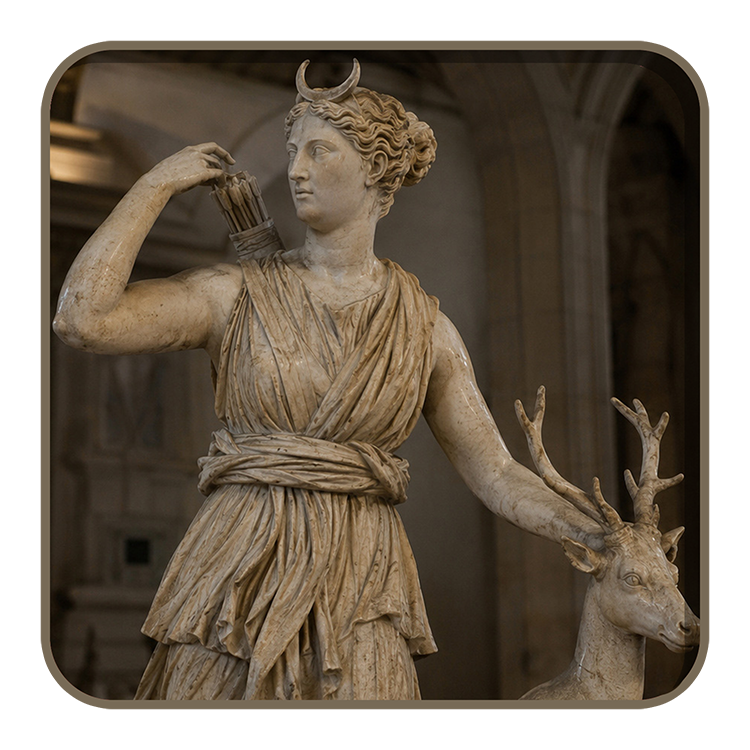
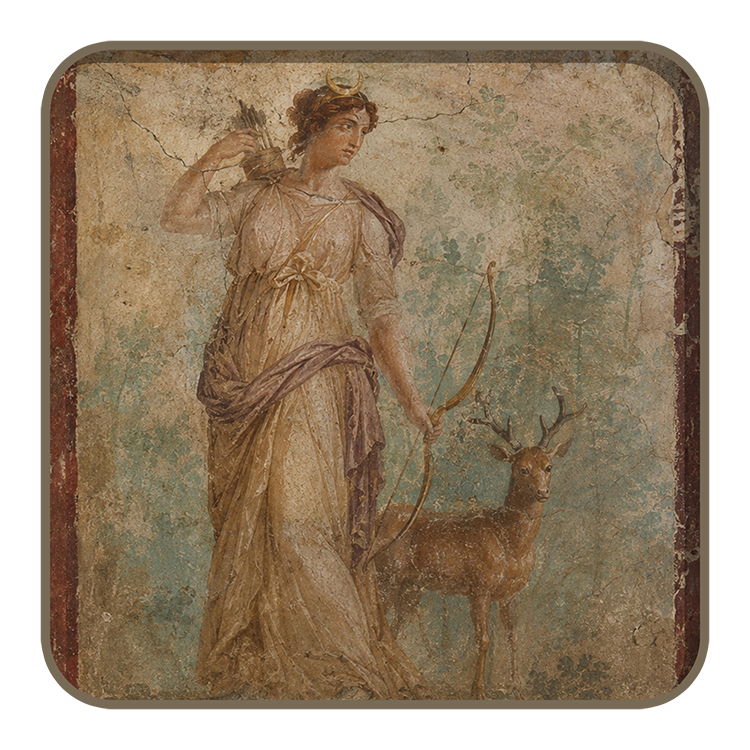
Diana was the Roman goddess of hunting, wild animals, woodland and the Moon. She also protected women, children and childbirth. Romans identified her with the Greek Artemis, so Diana inherited many stories about the independent huntress who carried a bow and travelled with nymphs. She was the daughter of Jupiter and Latona and twin sister of Apollo. She chose never to marry. In later art, Diana often wears a short hunting dress, carries a bow and appears beside a deer or hunting dog. A crescent moon above her head makes her especially easy to recognise.
Diana was not simply Artemis with a Roman name. One of her most important Italian sanctuaries stood beside Lake Nemi, south of Rome, where she was worshipped as Diana Nemorensis, ‘Diana of the Grove’. Her festival, the Nemoralia, was celebrated in August. Worshippers travelled with lamps or torches, decorated hunting dogs with flowers and brought requests to the goddess. Hunting was avoided during the festival. Imagine the lake at night, surrounded by flickering lights and garlanded dogs. I think it must have looked amazing.
Like Artemis, Diana could punish anyone who ignored her boundaries. The hunter Actaeon saw her bathing, either accidentally or after offending her in another way depending on the version. Diana transformed him into a stag, and his own hunting dogs chased him because they no longer recognised him. Diana also had a temple on Rome’s Aventine Hill and was especially important to ordinary people and enslaved people. Later poets sometimes connected her with Luna in the sky and Hecate in the underworld, giving her a mysterious triple identity. Diana is a brilliant example of Roman mythology mixing traditions together. She carries Greek stories, old Italian worship and Roman festivals all at once, while still remaining the fearless goddess who is happiest in the wild.


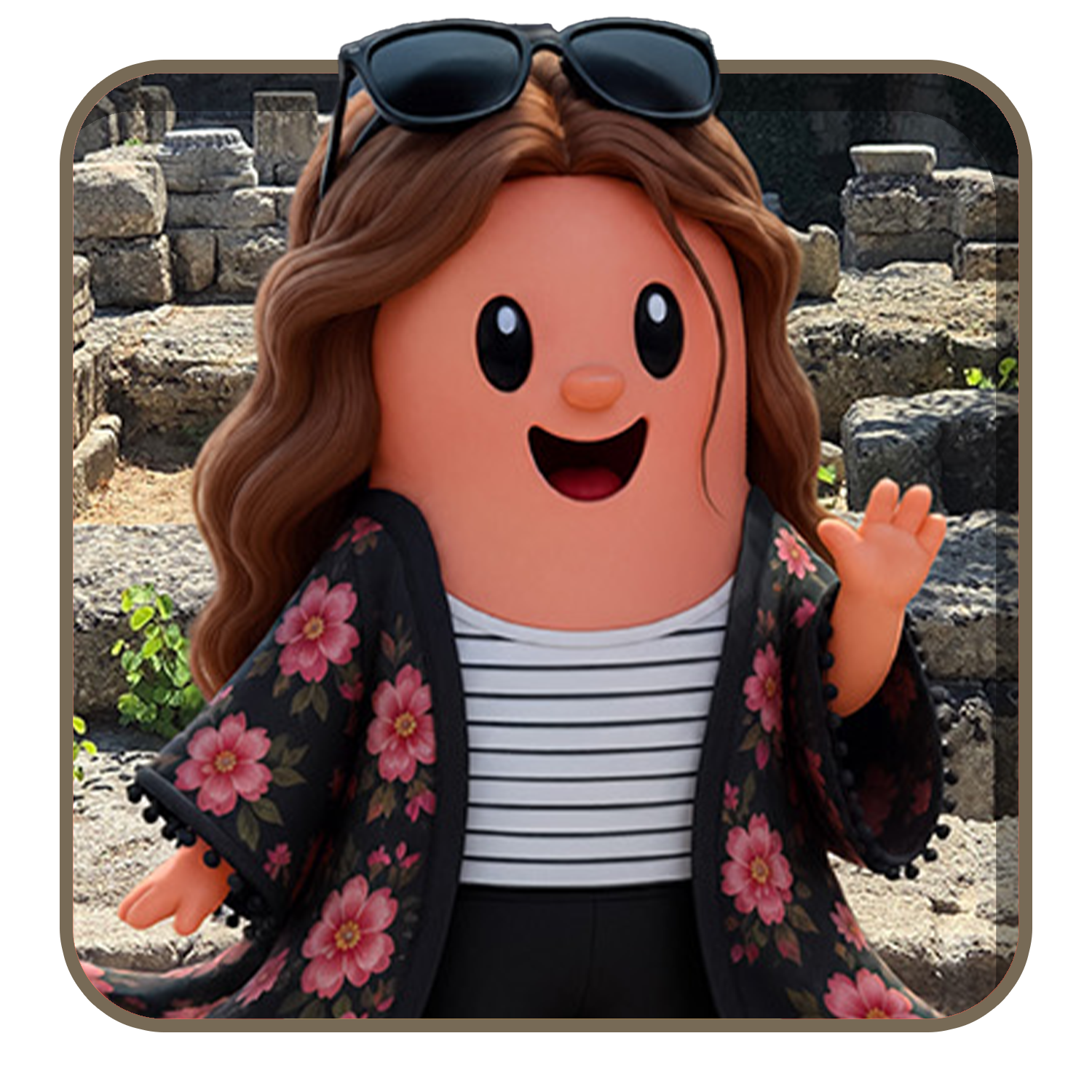
Hi! I’m Jocelyn, and I created Mythfits Society to make discovering ancient myths easier, more interesting and much more fun.
Read My Story