



Caesar grew up while the Roman Republic was shaken by violence between competing leaders. As a young man he refused an order from the dictator Sulla to divorce his wife and had to hide until friends obtained a pardon. He later served in the army, trained as a speaker and climbed Rome’s political ladder. A famous story says pirates kidnapped him. While awaiting ransom, Caesar joked that he would return and punish them. Once freed, he raised ships, captured the pirates and carried out the threat. Ancient biographies may polish the details, but the tale reflects his astonishing confidence. Caesar joined an informal political partnership with the wealthy Crassus and the successful general Pompey. Modern historians call it the First Triumvirate. With their support, Caesar became consul in 59 BCE and then governor of provinces including parts of Gaul.
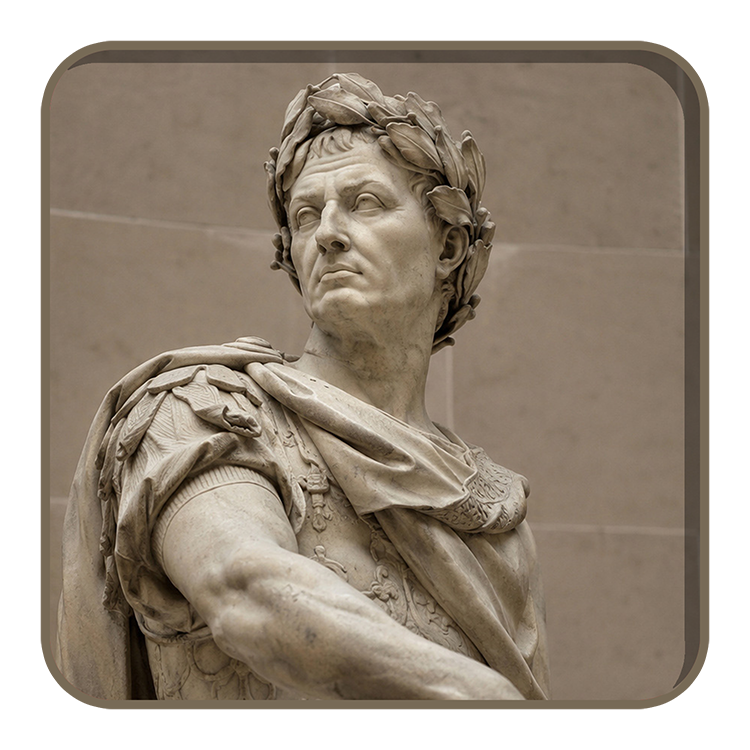
From 58 to 50 BCE he conquered a huge area covering much of modern France and Belgium. He described the campaigns in clear reports called the Commentaries on the Gallic War. They are valuable sources, but Caesar wrote them to present his own choices favourably. The conquest killed or enslaved vast numbers of people. The Gallic leader Vercingetorix united several tribes against Rome. In 52 BCE Caesar trapped his forces inside Alesia, then built lines of fortifications facing both inwards and outwards because another Gallic army was approaching. After desperate fighting, Vercingetorix surrendered. Caesar’s victories made him rich, famous and loyal to his soldiers. They also alarmed senators and Pompey. When ordered to give up his command, Caesar crossed the River Rubicon into Italy in 49 BCE with an army.
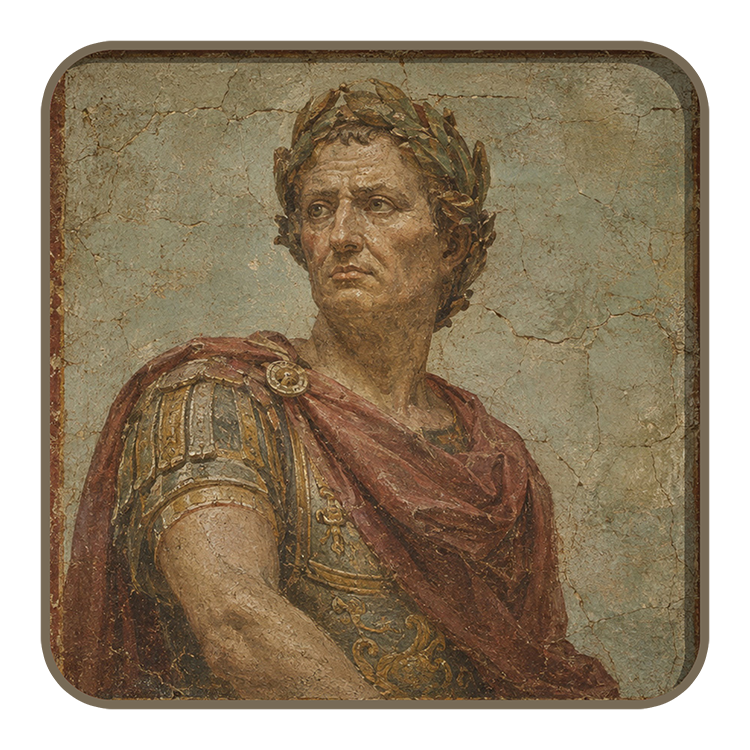
This broke Roman law and began civil war. The phrase ‘crossing the Rubicon’ still means making a decision that cannot be reversed. Caesar defeated Pompey’s forces and pursued him to Egypt, where Pompey had already been murdered. Caesar became involved in a royal struggle and supported Cleopatra VII as queen. After further victories he returned to Rome and received repeated honours. He reduced debt, settled veterans, enlarged the Senate, planned building projects and extended citizenship. His Julian calendar set a year of 365 days with a leap day every four years. A slightly corrected version, the Gregorian calendar, is now used across much of the world.






Hi! I’m Jocelyn, and I created Mythfits Society to make discovering ancient myths easier, more interesting and much more fun.
Read My Story