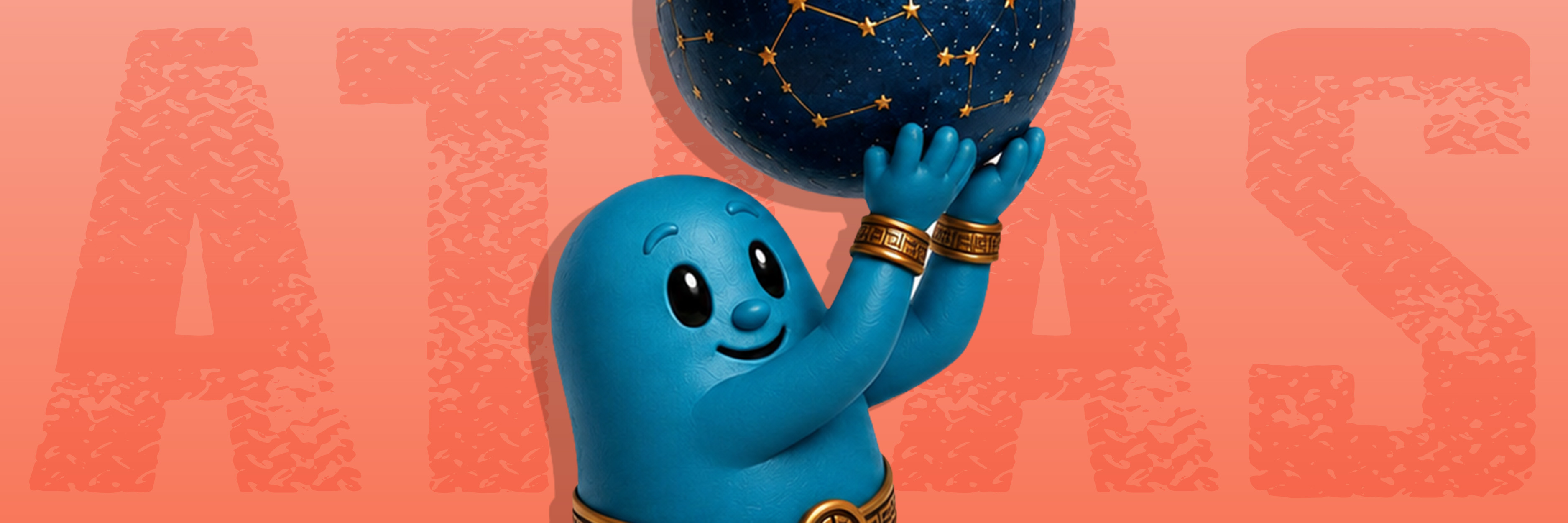

Atlas was one of the Titans, the powerful older gods who came before Zeus and the Olympians. His father was Iapetus, and his brothers included Prometheus and Epimetheus. When a huge war broke out between the Titans and the younger gods, Atlas fought on the Titan side. Zeus and the Olympians eventually won, and the defeated Titans were punished. Atlas received one of the strangest punishments of all. He was sent to the far edge of the world and ordered to hold the sky above the Earth. Imagine never being able to put your arms down! Atlas was incredibly strong, but even for a Titan this was an enormous job.
Atlas later appears in one of the Twelve Labours of Heracles. Heracles had been ordered to collect magical golden apples from the garden of the Hesperides, and Atlas knew how to get them. Heracles offered to hold up the sky while Atlas went to fetch the apples. For the first time in ages, Atlas was free from his terrible burden. When he returned, he decided he did not really fancy taking the sky back! He offered to deliver the apples himself while Heracles stayed behind. Heracles realised what Atlas was doing and quickly thought of a trick. He asked Atlas to hold the sky for just a moment while he adjusted the padding on his shoulders. Atlas agreed, Heracles picked up the apples and left!
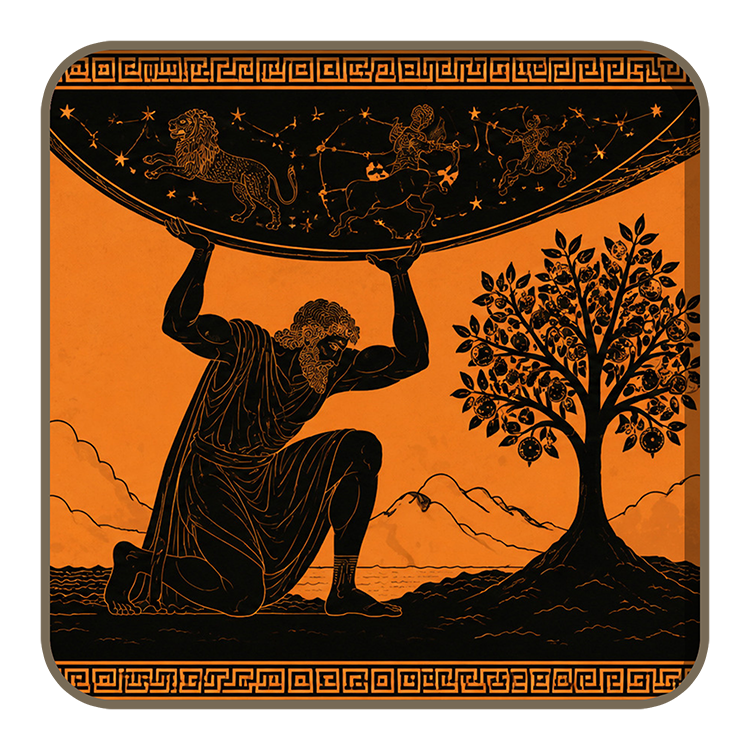
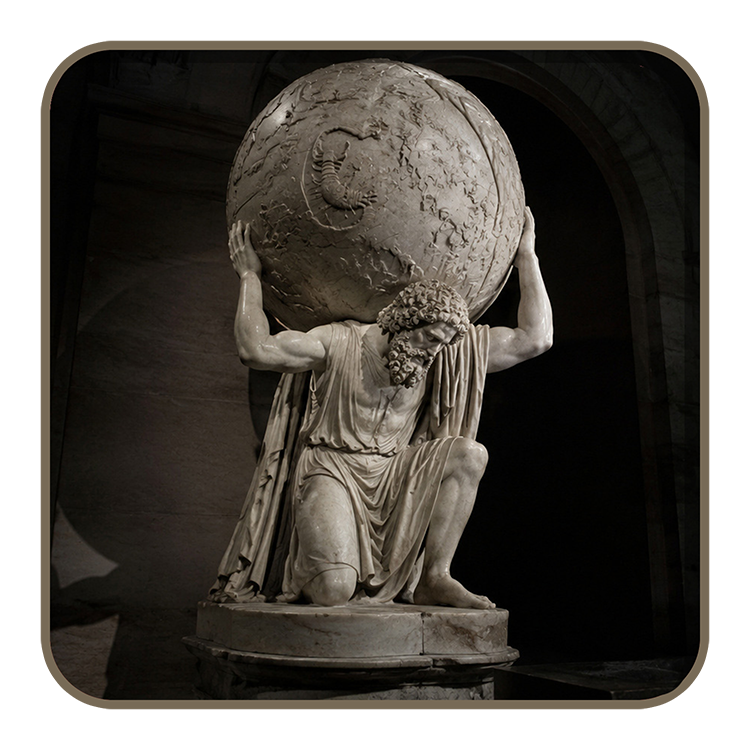
Today, Atlas is often shown carrying a giant globe on his shoulders. This has made lots of people think the Greek myths said he carried planet Earth. They did not. His punishment was to support the heavens and keep the sky away from the Earth. A famous ancient statue called the Farnese Atlas shows him carrying a globe covered with stars and constellations. Much later, the word ‘atlas’ also became the name for a book of maps. Atlas is easy to remember because everything about him feels enormous: he was a Titan, he fought in a war between gods, and his punishment involved holding up the whole sky. I complain when my school bag feels heavy, so I definitely would not swap jobs with him!

Hi! I’m Jocelyn, and I created Mythfits Society to make discovering ancient myths easier, more interesting and much more fun.
Read My Story