



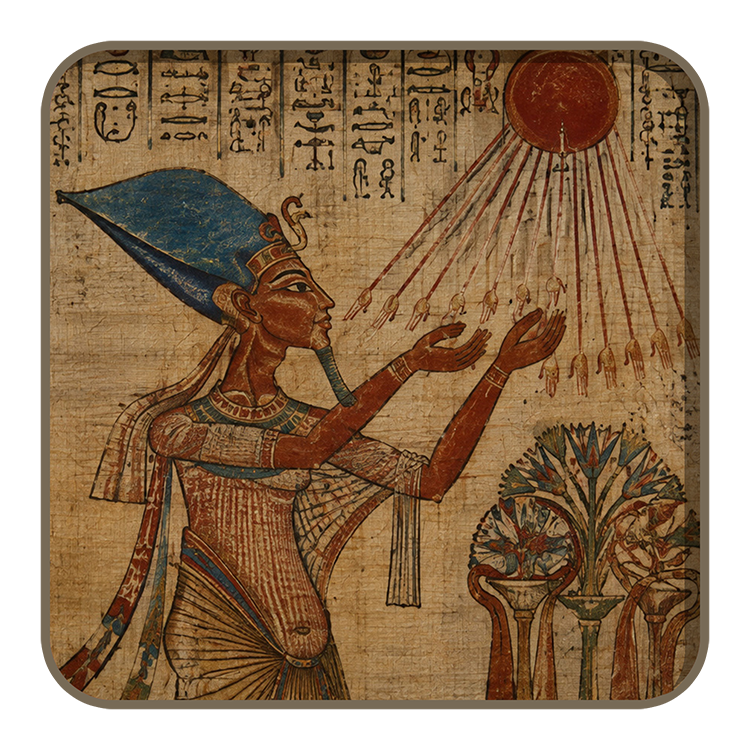
Amenhotep IV was a son of Amenhotep III and Queen Tiye. Early in his reign he still worked within older traditions, but he soon built open-air temples for the Aten at Karnak. The Aten was shown as a sun disc whose rays ended in little hands, some holding signs of life towards the royal family. The king changed his name to Akhenaten, usually translated as 'effective for the Aten'. His chief wife Nefertiti appeared beside him with exceptional prominence, sometimes performing actions normally reserved for kings. Akhenaten founded a new capital called Akhetaten, meaning 'Horizon of the Aten', at the site now called Amarna. Boundary stones carved into the surrounding cliffs marked its limits and explained that the Aten had chosen the location. Palaces, temples, houses, workshops and officials' tombs were built rapidly.
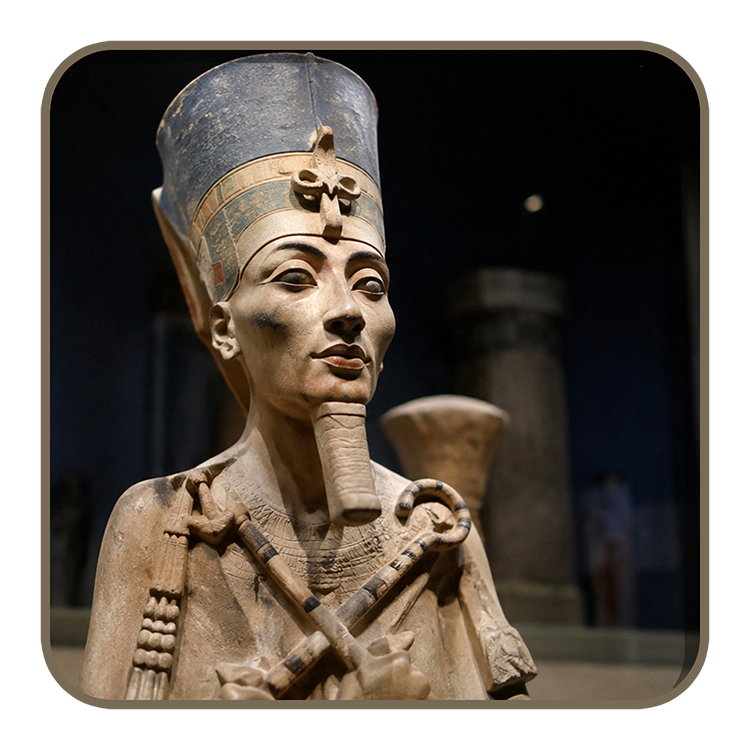
Aten temples had broad open courts because sunlight was central to worship. Moving the court created huge work for builders and changed the lives of thousands of officials, labourers, craftspeople and their families. Royal art also changed. Akhenaten was shown with a long face, narrow eyes, full lips, a rounded stomach and wide hips. Nefertiti and their daughters appeared in warm family scenes, sometimes sitting together beneath the Aten's rays. Scholars debate why the bodies look this way. The style may express special religious ideas and distinguish the royal family rather than record an illness. It would be a mistake to diagnose Akhenaten from deliberately designed images made to communicate sacred kingship. Akhenaten's religion is sometimes called the first monotheism, but that description needs care. The Aten became the main focus of state worship, temples of other gods lost support and the name of Amun was attacked in many places.
However, evidence shows that some people continued using household figures and amulets connected with other deities. We cannot assume that every Egyptian instantly accepted the king's programme. Most people probably met the changes through taxes, temple work and official ceremonies rather than through personal theological debates. Letters found at Amarna reveal diplomacy with rulers across the eastern Mediterranean and western Asia. They discuss gifts, marriages, loyalty and conflict. Akhenaten has often been accused of ignoring Egypt's foreign territories, but the evidence is incomplete and historians disagree about how far control weakened during his reign.





Hi! I’m Jocelyn, and I created Mythfits Society to make discovering ancient myths easier, more interesting and much more fun.
Read My Story